Words for the day: “carapace” is the top of a turtle’s shell, “plastron” is the bottom of the shell. Go forth and win a trivia contest.
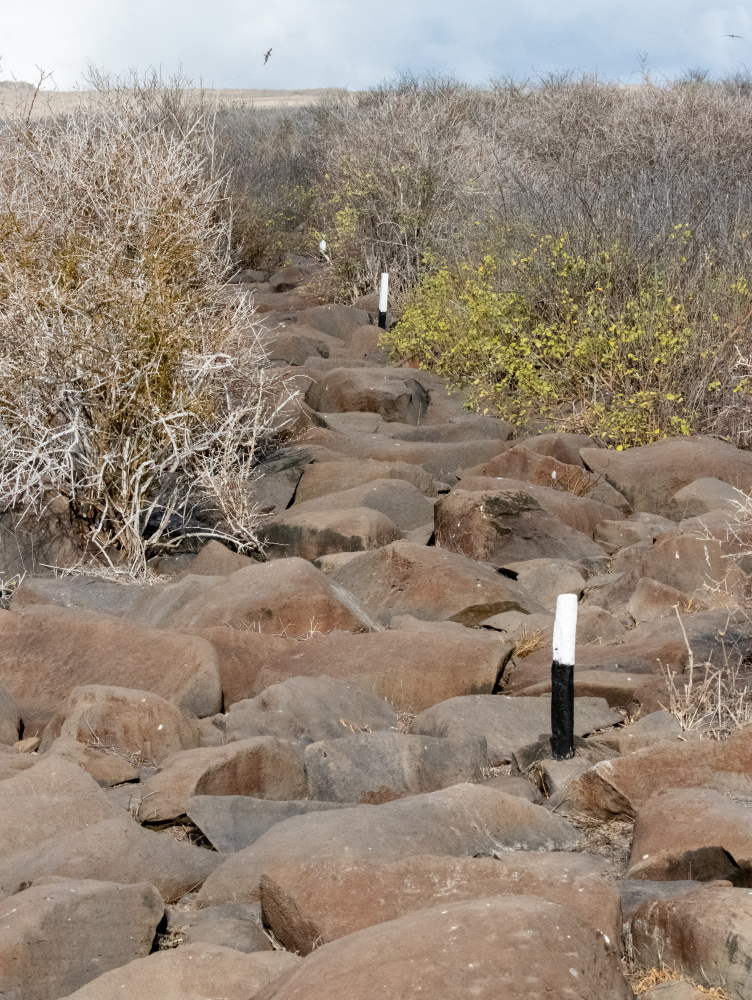
Recall that Silversea classifies their wildlife walks as either “Easy”, “Moderate”, “Adventurous” or “Challenging”. Today was my first Challenging. It was two hours over mostly rocky paths. However, Española Island was the place to see albatross, so I was going. The path was about 80% assorted rock, with more small, wobbly rocks than hikes I have taken on the other islands. I had my first fall – my first thought was “protect the camera!” I can’t decide if I should be proud of that or not.
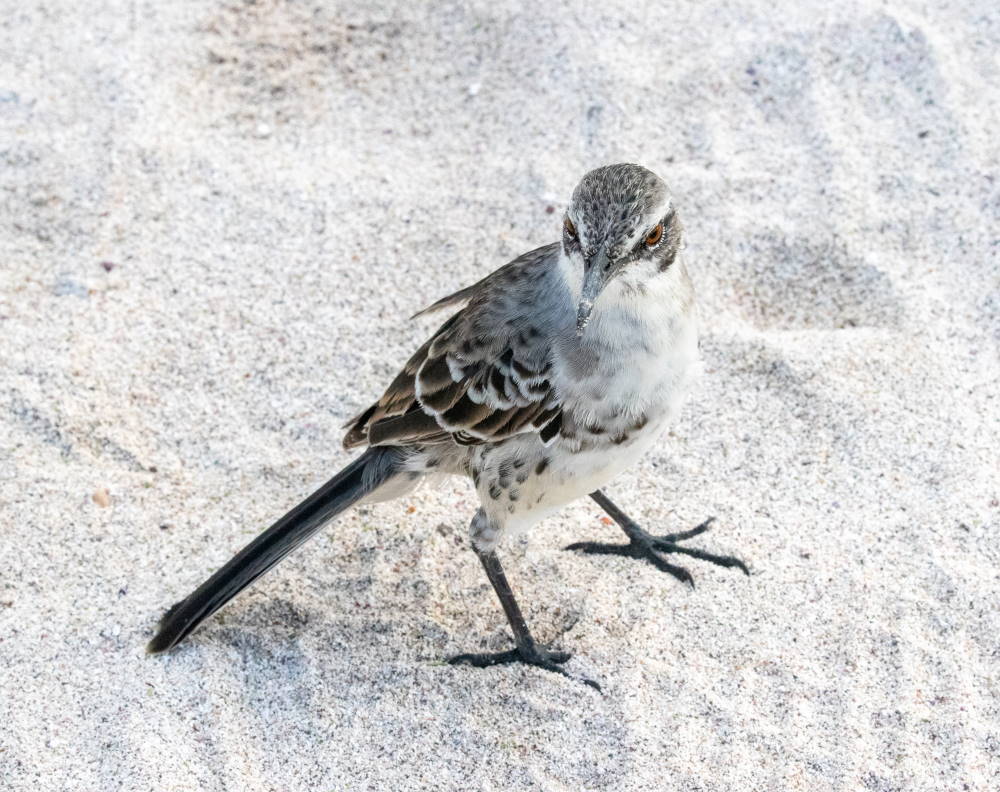
Immediately upon leaving the Zodiac we were met at the beach by a Hood Mockingbird. If I had not just spent five days around wild animals having no fear of humans, I would has sworn it was domesticated. While we were removing our life jackets and pulling our cameras out of back packs the bird was literally jumping into our bags to have a look around.
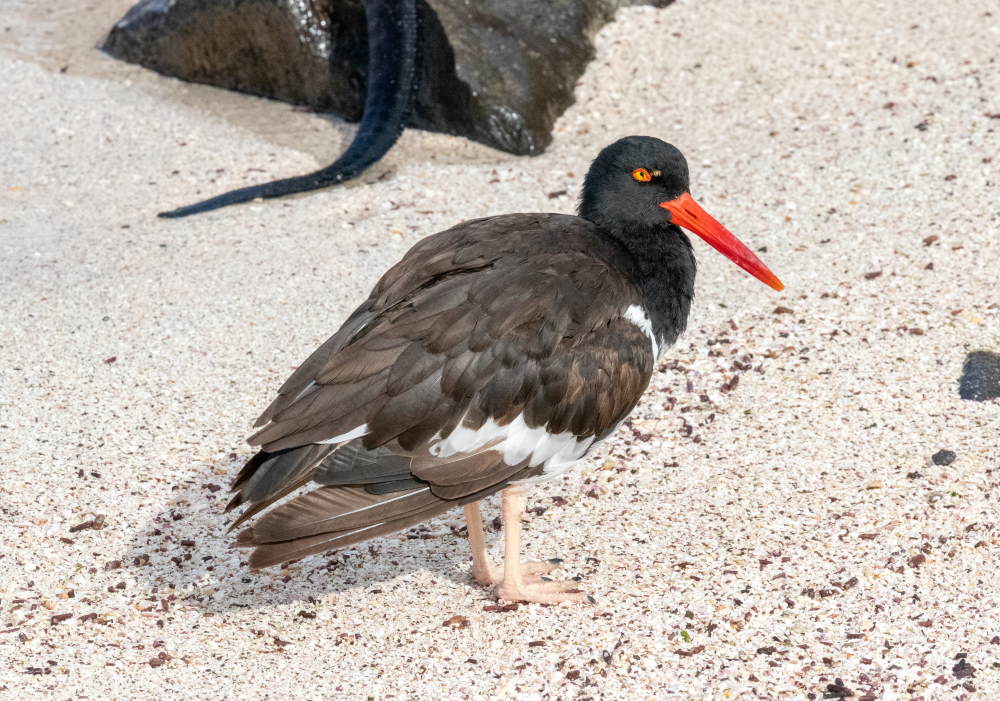
Slightly farther we had the return of the American Oyster Catcher. Those eyes look kind of fierce.
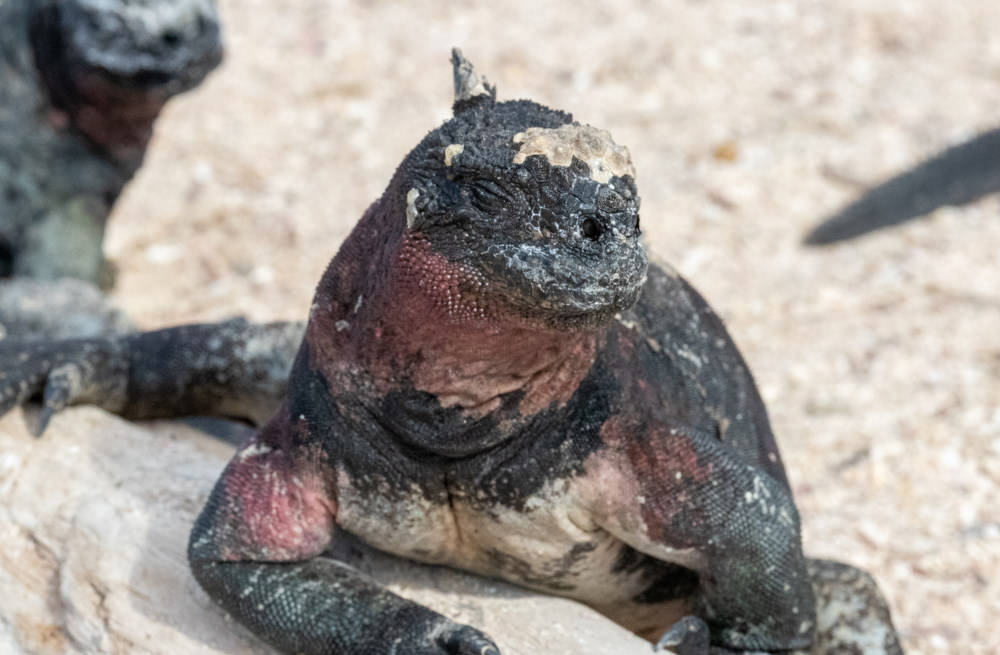
The Marine Iguana on each island are slightly different. The ones on Española had a red and green coloring that other did not have.
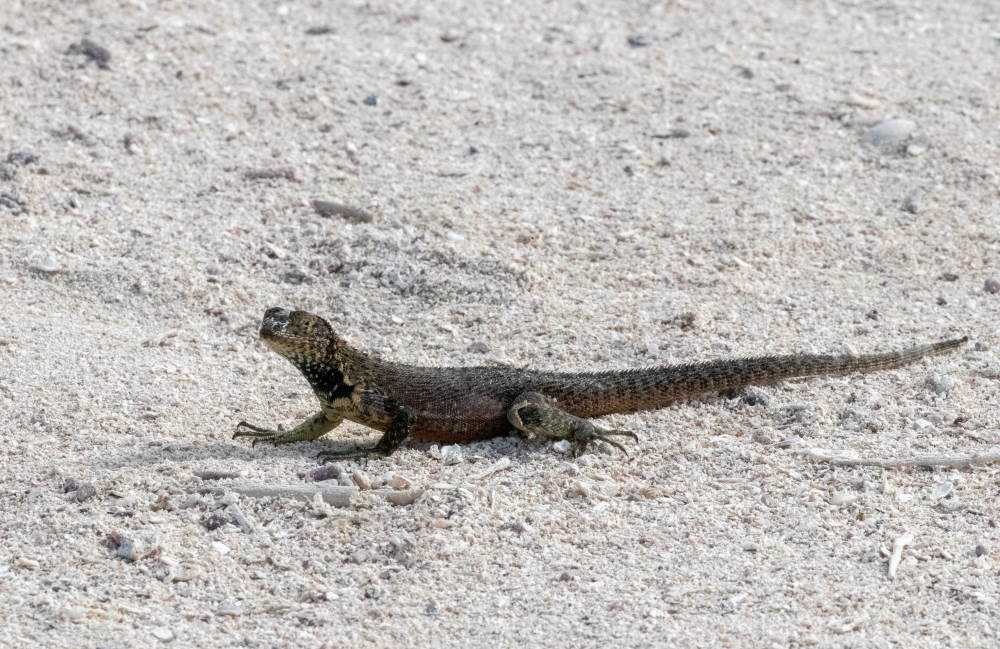
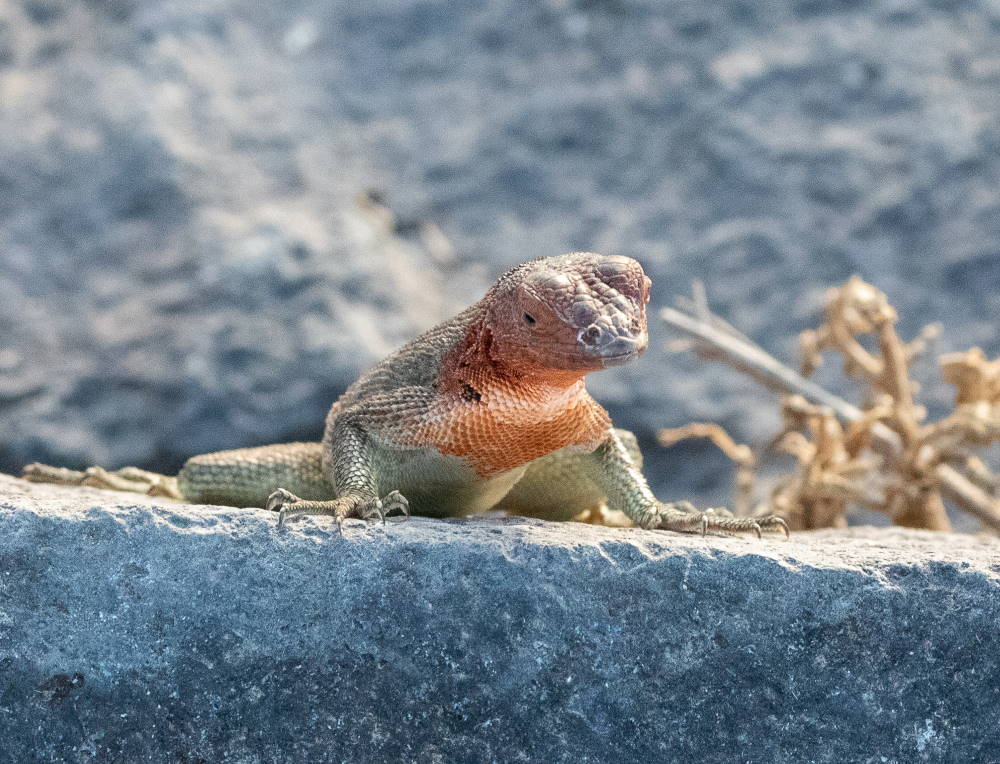
Even the Lava Lizards get into the act. Some also had some red coloring.
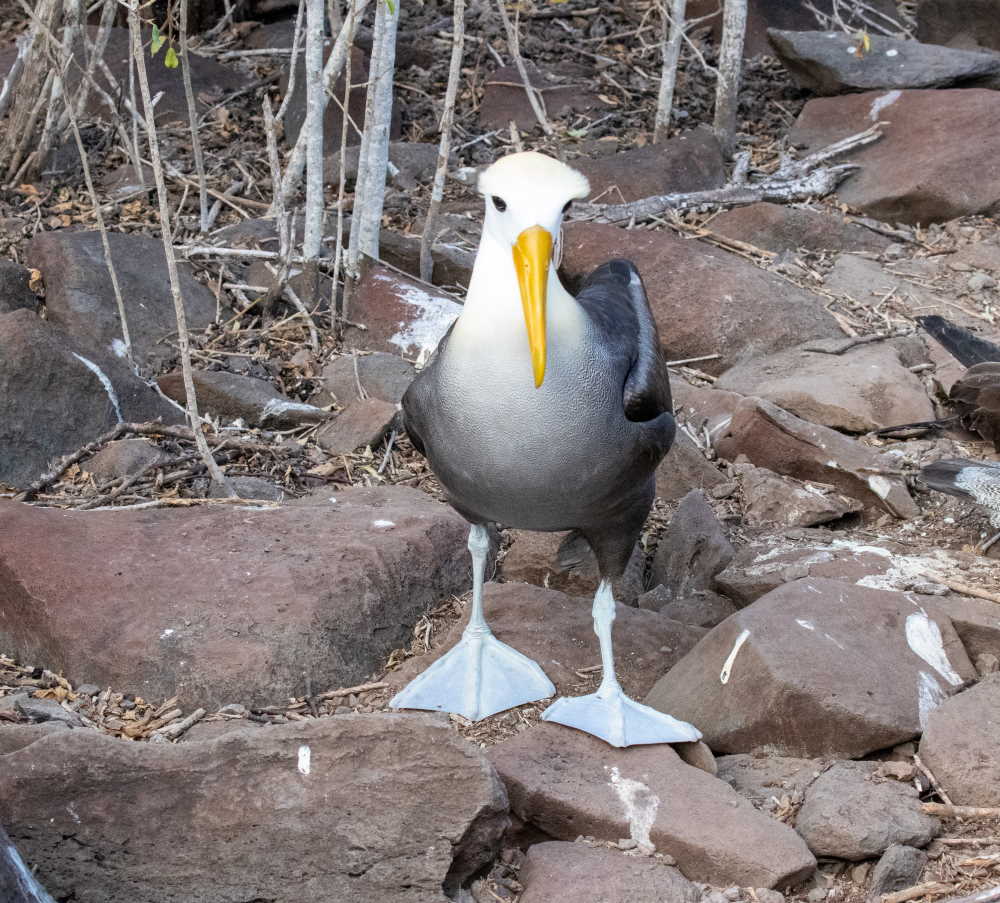
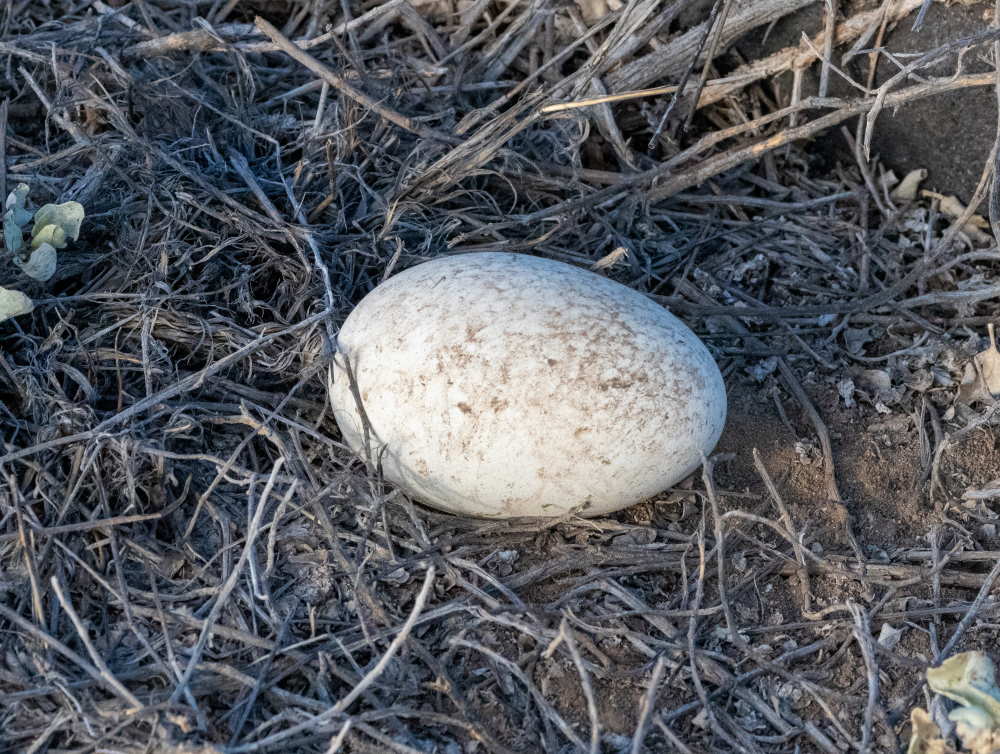
The stars of the show here are the Waved Albatross. They don’t build nests of any kind. The just seemingly sit wherever they choose and drop an egg. There were two sitting right in the middle of the path, refusing to move as tourists gently pushed into the bush trying to bypass them.
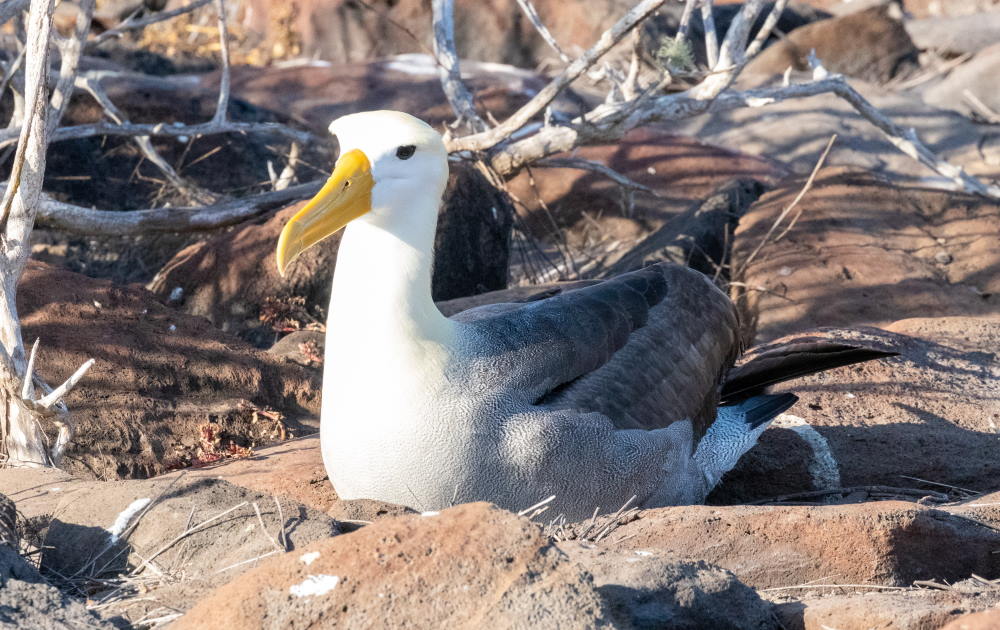
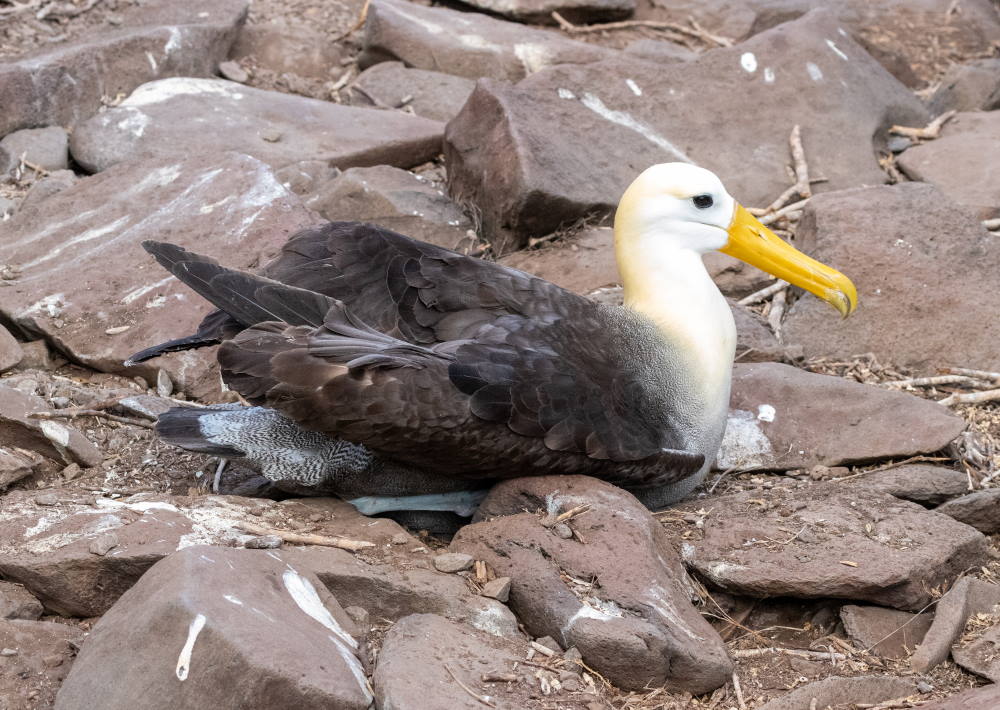
One albatross came walking down the path, perhaps to swap places on the egg with a mate. It had us leaping of the way as it strutted down the path like it owned the place. Maybe it does.
This albatross egg was just sitting in the open next to the path. Our guide explained they can get away with that since there are no rodents or the like here.
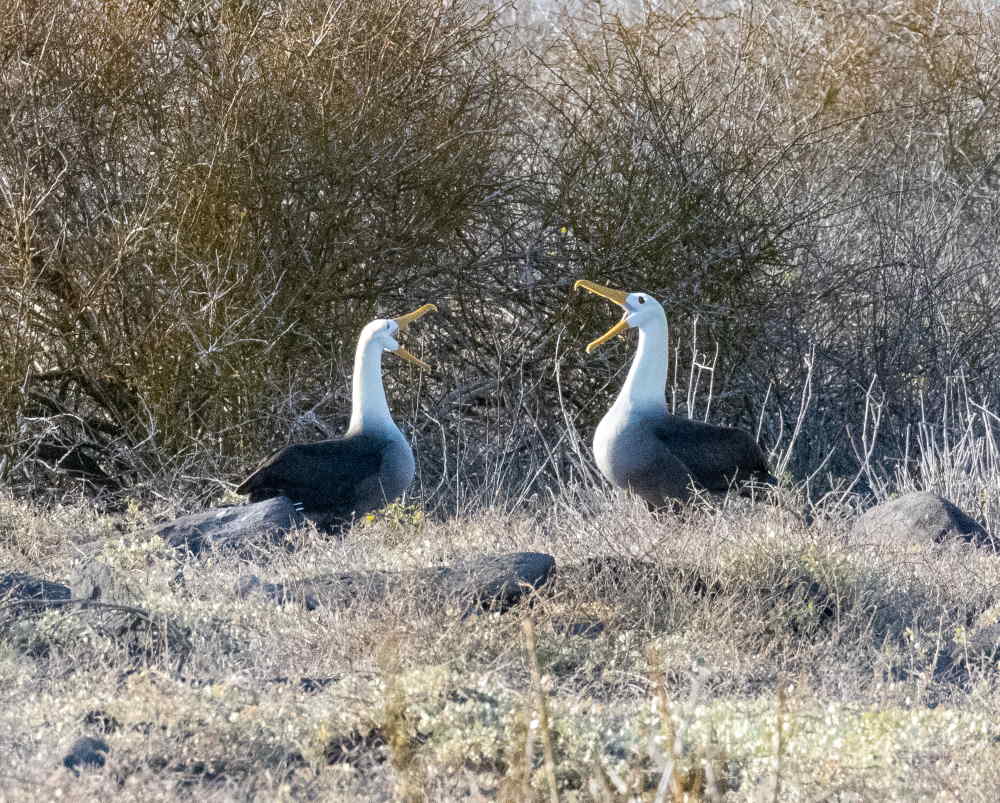
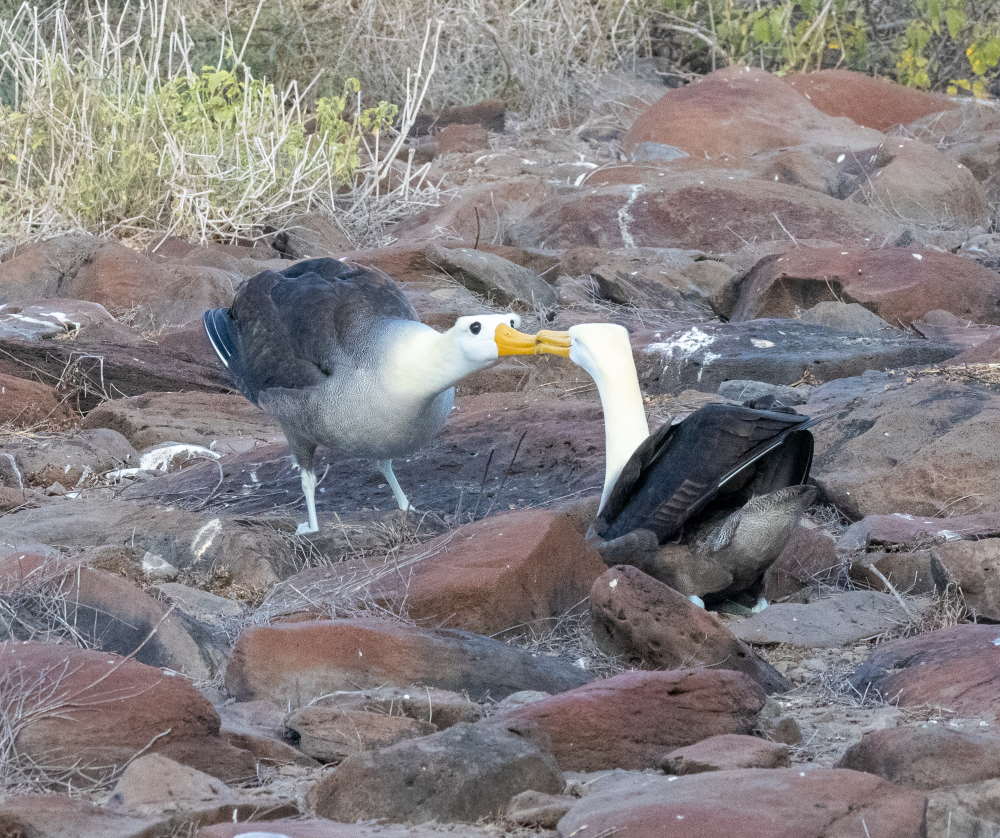
We got really lucky and saw some courting albatross. I have some video I will upload when I have better internet.
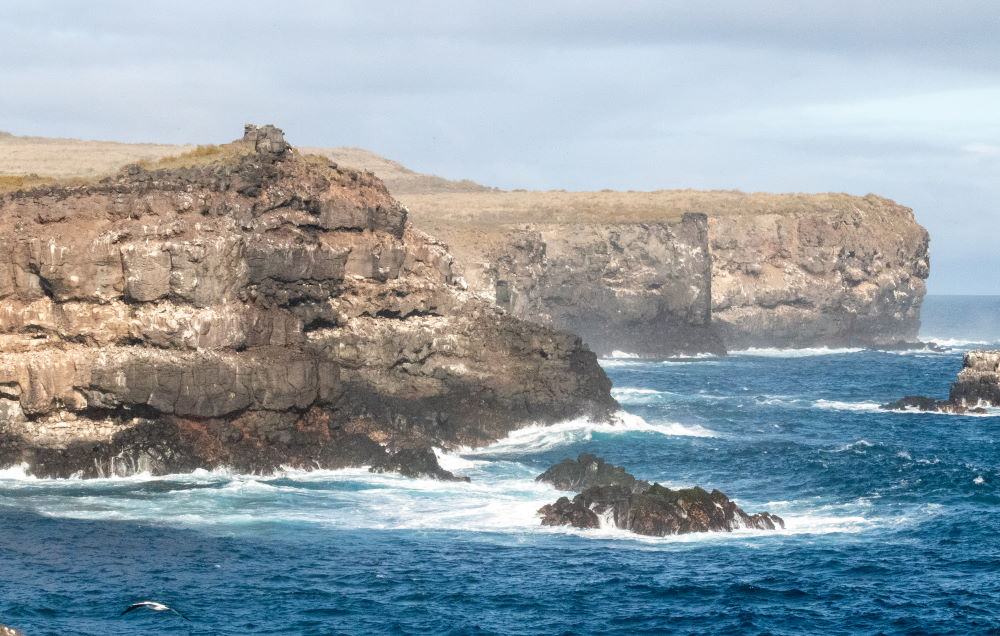
We were then halfway on our hike, observing the sea cliffs on the other side of the island. This explains why the albatross were here. While graceful in the sky, they are a bit clumsy on land. Therefore, they use the winds and the cliff to get airborne. I feel I have not taken enough landscape pictures, but most of the time I am head-high in bush. Here I finally got an unobstructed view.
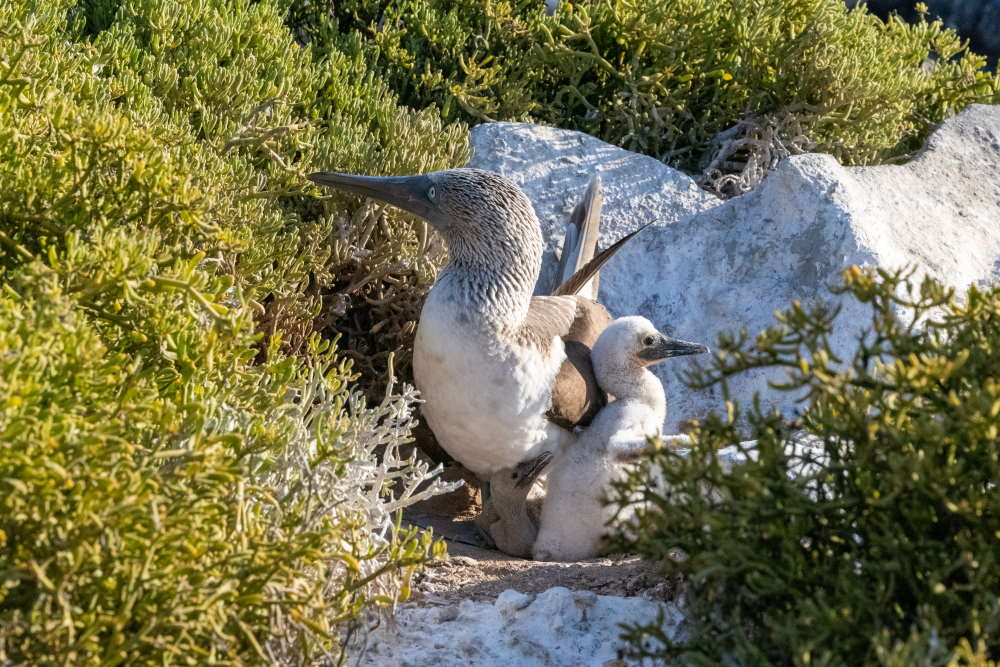
Near the cliffs we were met by more Boobies. The Blue-Footed Booby were protecting their newly hatched chicks.
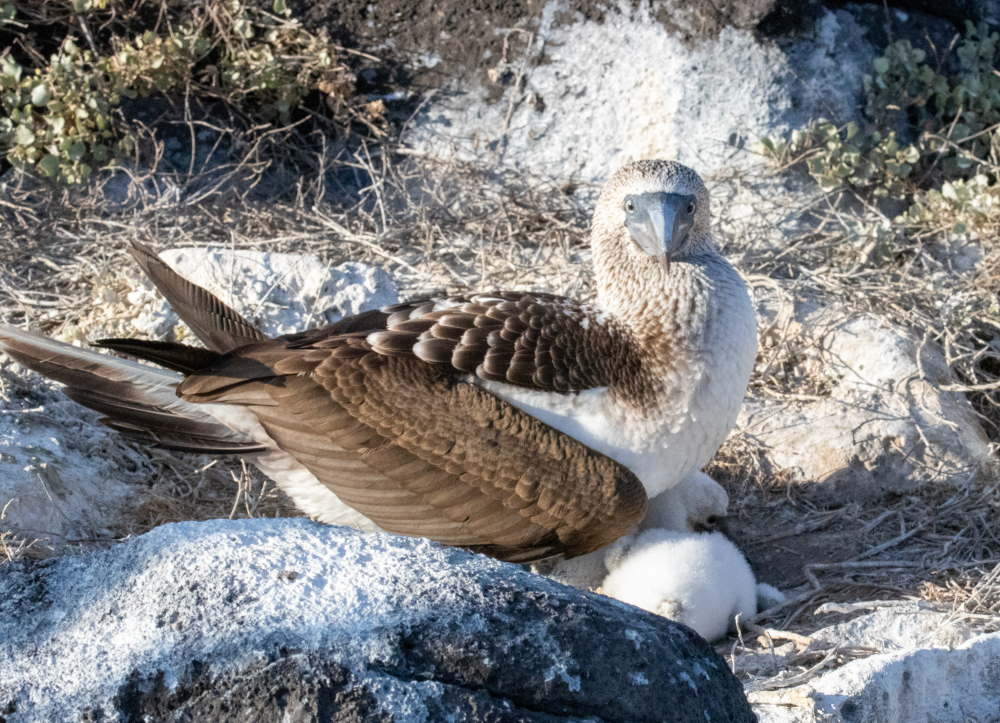
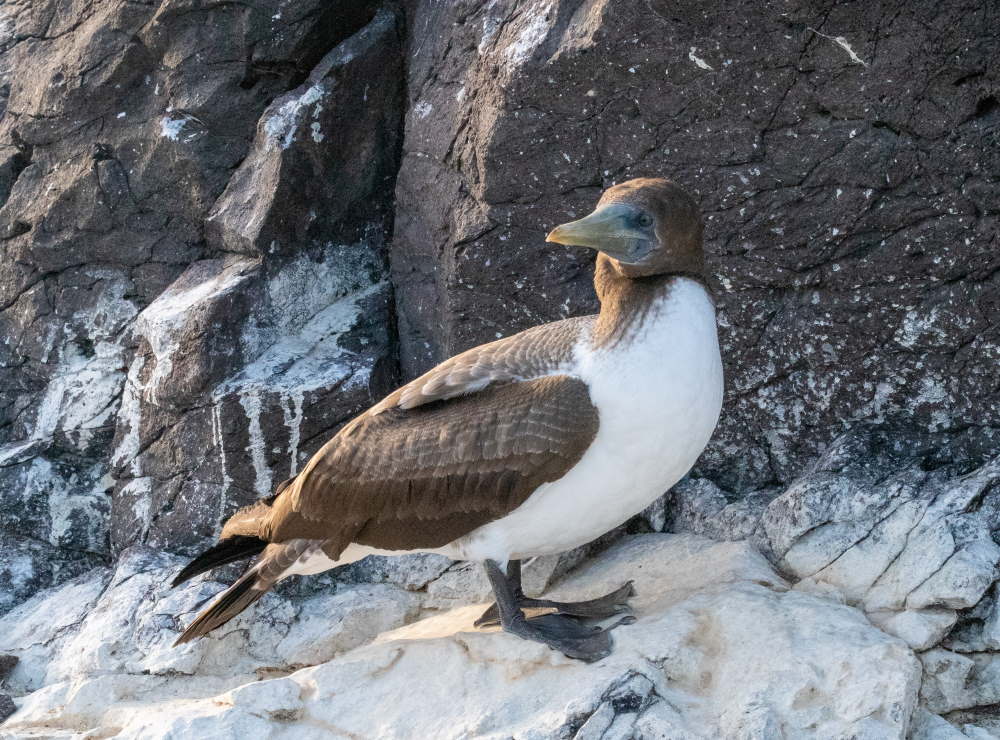
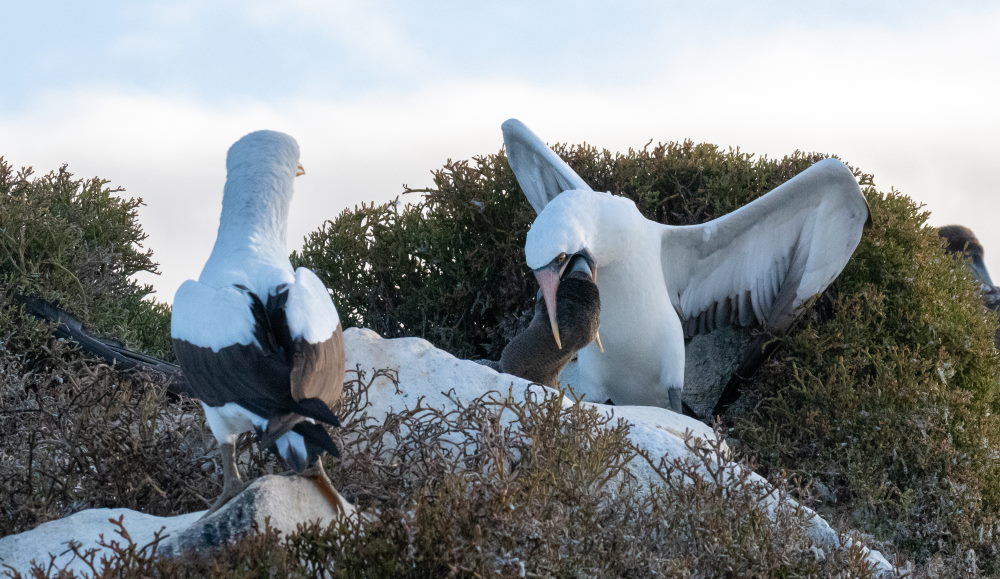
We also found Nazca Booby. The adolescents have brown feathers that change to white upon becoming adults. The adults still feed them as adolescents, with the teens peeking the side of the adult’s bill to encourage the regurgitation reflex. They scream constantly for attention.
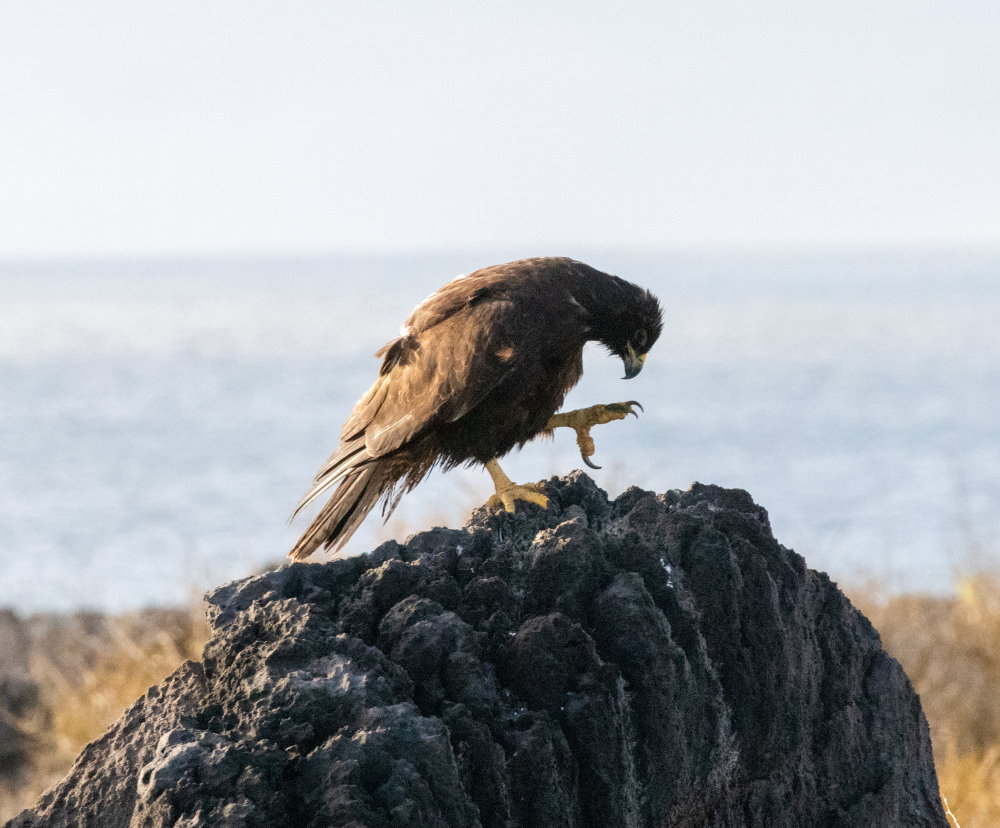
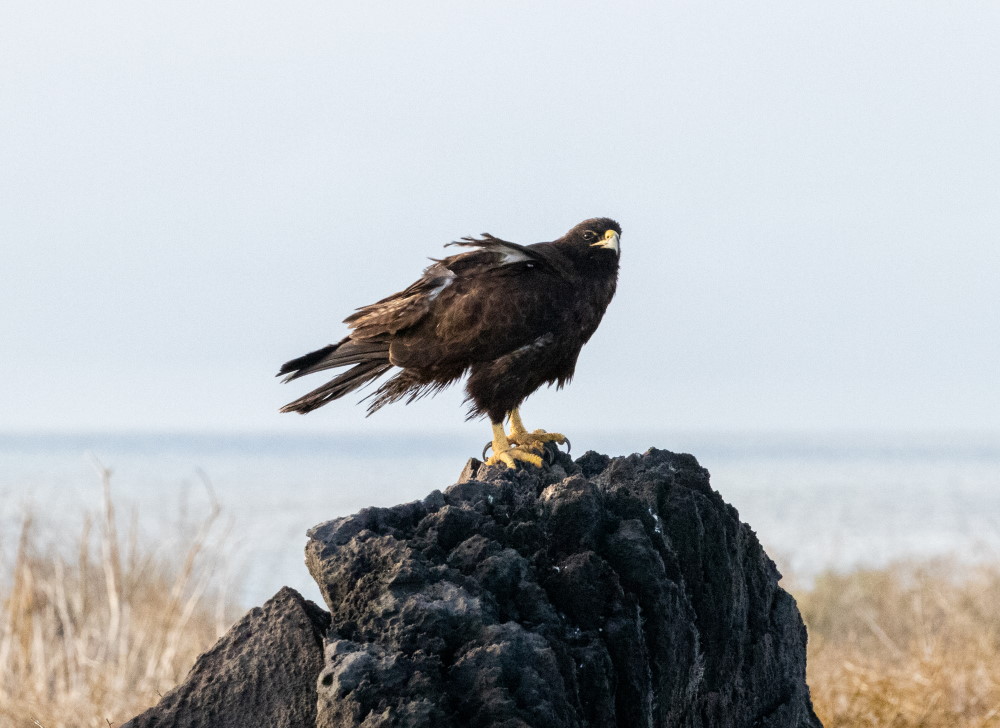
Near the end of our two-hour hike, we hit pay dirt. Among the 100s of birds in the sky, every now and then we spotted a Galapagos Hawk, always at a great distance. There was one stationary for several minutes as they faced into the wind, just looking down for some unlucky lunch. We turned away and accepted our fate when a hawk suddenly dropped down and landed on an outcrop only 50 meters away. The island then experienced the sound of a dozen rubber-legged tourists grabbing for their cameras. The hawk spent several minutes showing us its butt while cleaning before finally giving us some profile poses
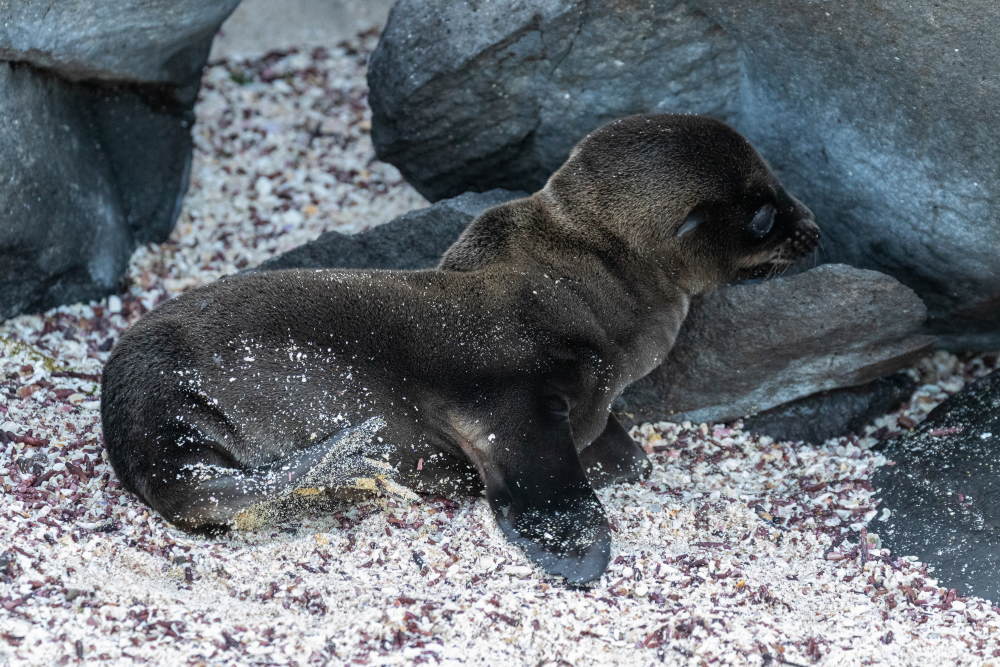
We finished back on the beach where we saw a lone Sea Lion pup. We tourists were worried, as there was no adult sea lion around. However, our guide said adults often must go to the sea to feed.
It was a very good day for picture taking. My knees are complaining and I needed to have the medical staff clean some scrapes, but I’m glad I went on this hike.
 Cruise Boy
Some of your best pics yet. Sorry for delay – been a long week since last Thursday (check FB).
Love the babies of every type!!!
LikeLike