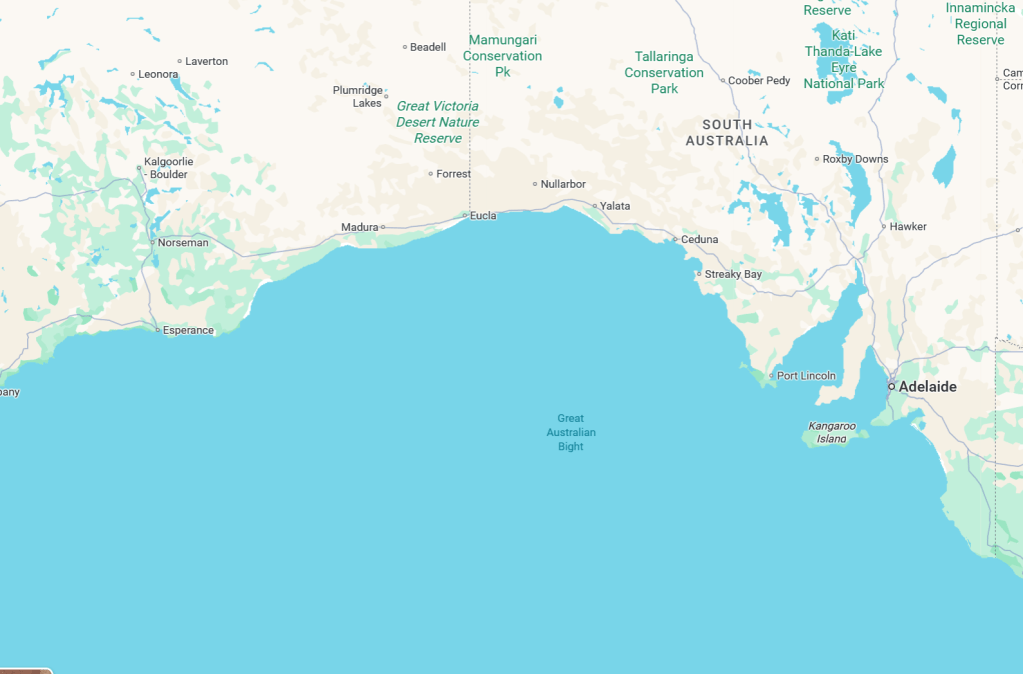
Port Lincoln is about 170 miles (280 km) from Adelaide by boat, but over an 8 hour drive due to geography – 4 hours north east around Spencer Gulf, then 4+ hours south. It is the entry into the Great Australian Bight. What is a “bight“? A bight is the water within a curvature of land that is not enclosed, as opposed to a “bay”. See? These cruises are educational!
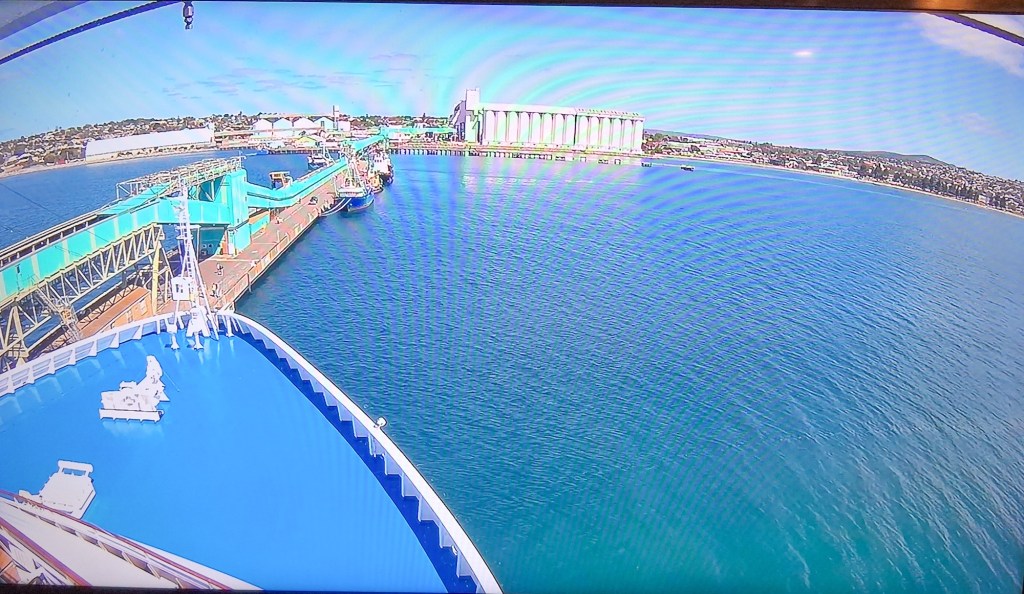
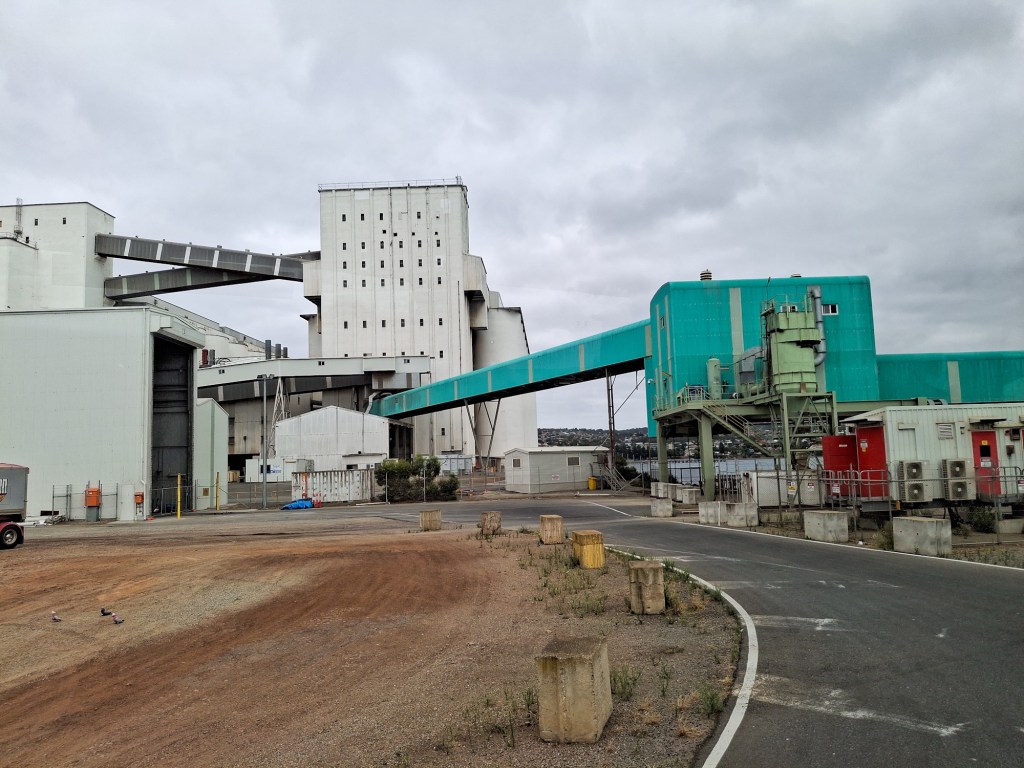
Port Lincoln is an industrial port with a population near 15,000. Their big things are fishing and grain distribution. There are giant grain silos near the port. The green tunnels you see are escalators for moving large volumes of grain from the silos to bulk cargo ships. (Sorry for the color effects on the image – I shot it from my cabin TV which was showing the front ship’s camera).
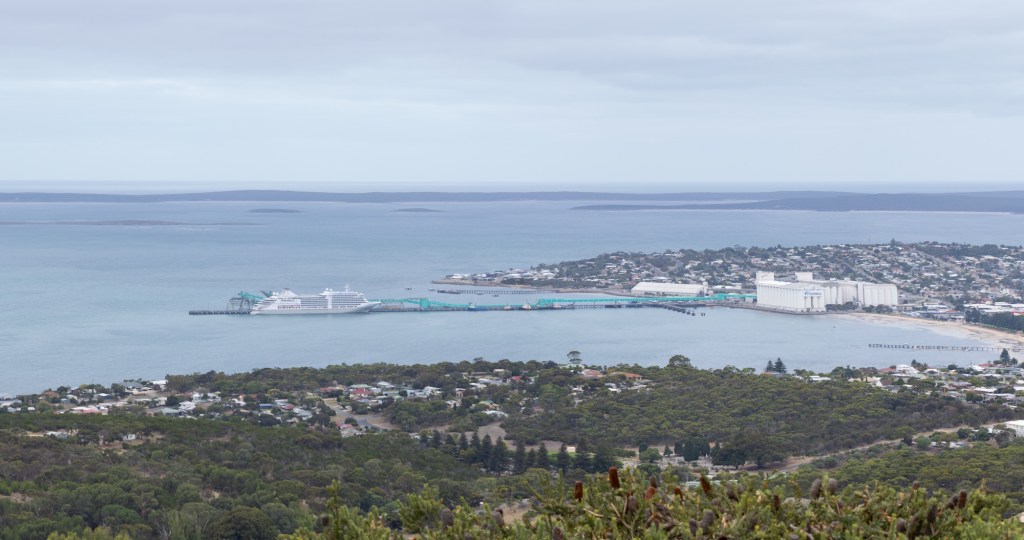
However, according to my bus guide most of the business comes fishing, specifically tuna. Because it’s not really fishing, it’s kidnapping. An tuna fleet consists of four ships – command, net, tug and chum. There is also a spotter plane used at the beginning.
- It takes two days for the fleet to get to the fishing area in the Bight
- The plane is called to refine the location
- Chum is cast to concentrate the tuna
- The net boat surrounds the fish
- The tug boat then grabs the nets and moves the tuna back to prepared pens in Port Lincoln
- The trip back can take as much as 30 days as they only move 1 knot
- The command ship has divers that “encourage” sharks to leave the fish alone and repair the net as needed
- About 20,000 tuna are moved this way at one time
They are so good there are strict limits on the tonnage they are allowed to capture. Tuna are fed and maintained in the pens until harvest ships arrive. 96% of the tuna fished in Australia come from the Bight and add $500 million to the economy.
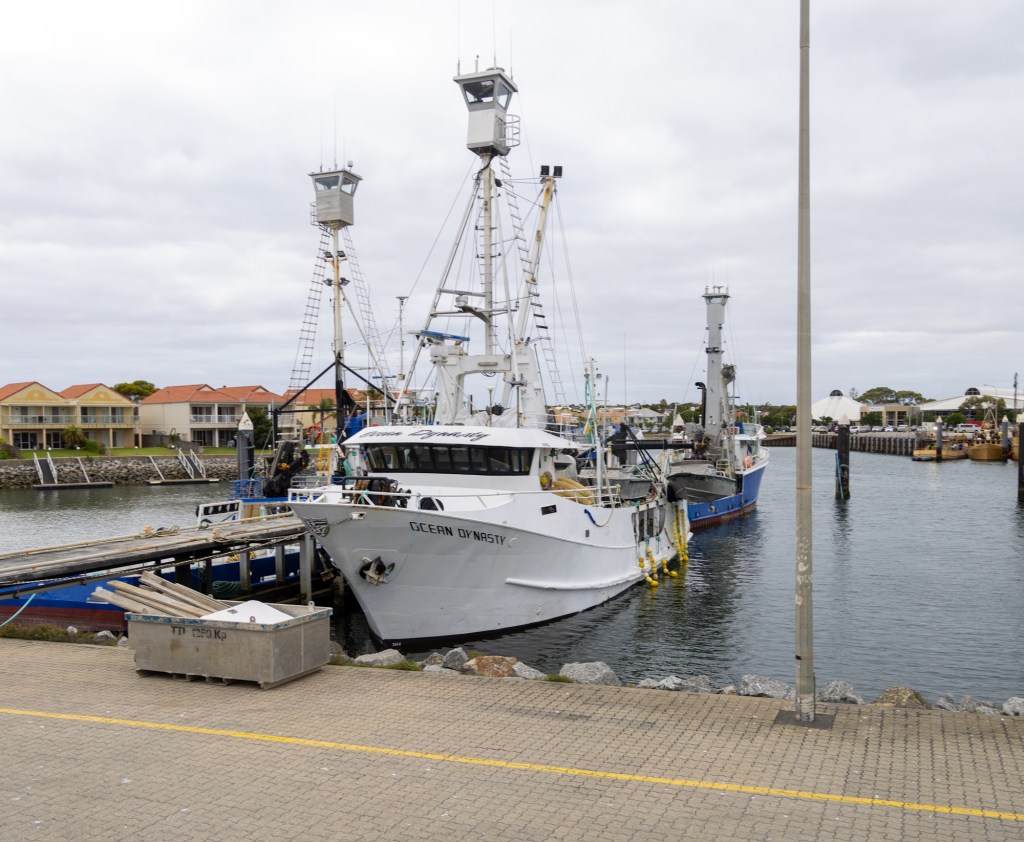
Supporting ships capture sardines that are used for the chum. The boats with “arms” at the side are for shrimp (“prawn”). As opposed to the tuna, shrimp are processed on the ship.
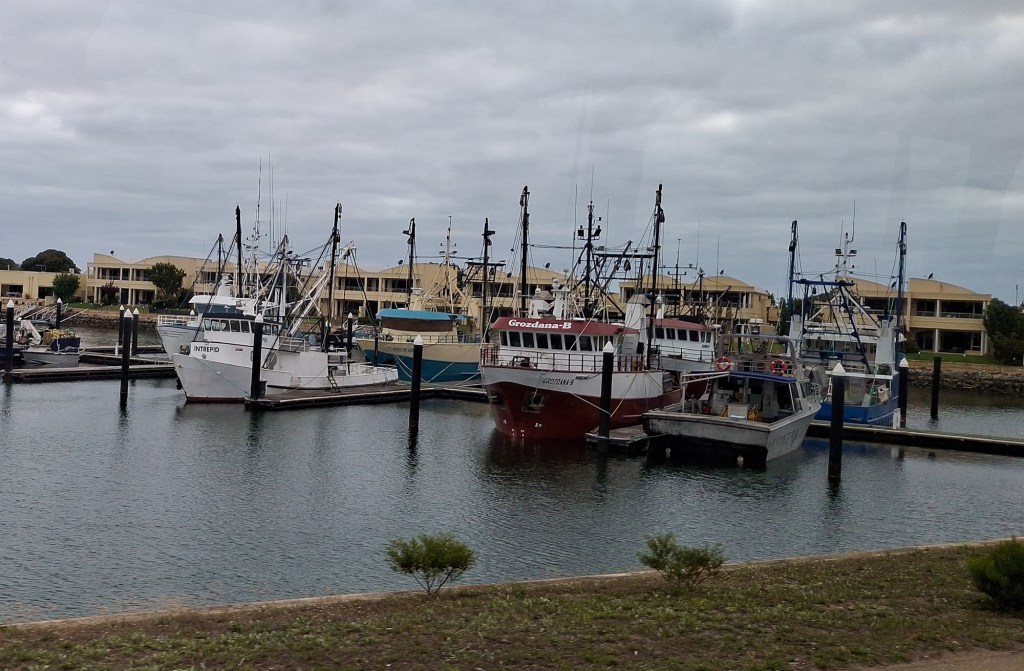
Everything that isn’t used for human consumption is processed on shore and converted into fertilizer or animal feed. Nothing is wasted.
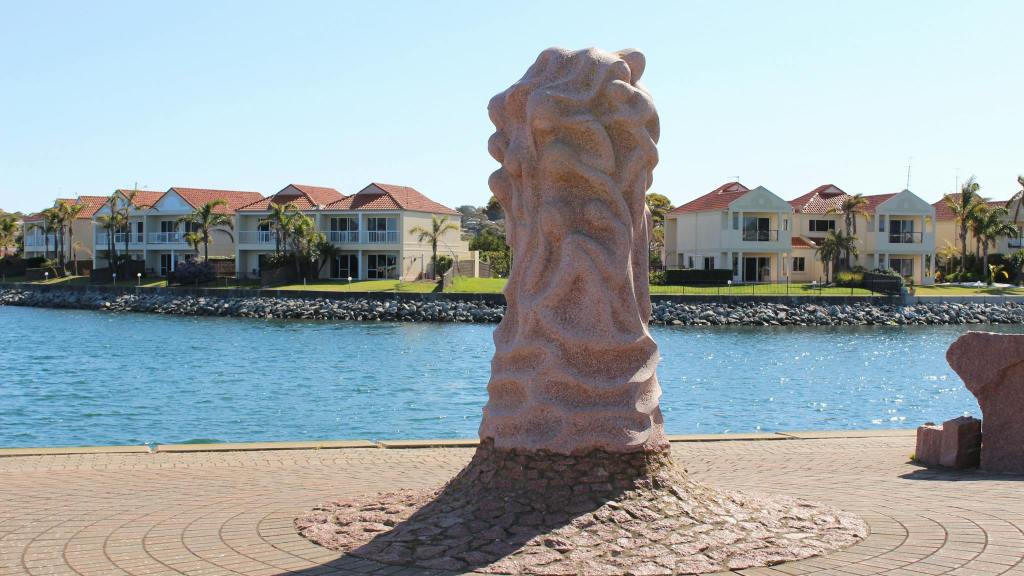
There is a memorial at the mouth of the harbor for fishers who are lost at sea.
This was a short visit, but I learned a lot. If I come to this area of the world again I’ll need to visit the Maritime Museum.
 Cruise Boy