Akita is even smaller than Niigata. You may recognize the word “akita” from the dog breed. There is a bronze statue of an akita dog “Hachiko” in Tokyo – the story is worth reading about, but I’ll leave that to Wikipedia.
Today is a relaxing day, because I need a bath. An “onsen” is a Japanese hot springs bathing facility. More about that later. We started with a quick tour of the local castle. Kind of.
The Satake family picked the wrong side in the major Shogun wars and was assigned to this small domain of present-day Akita. Because of that, and the lack of a large enough tax base, Akita Castle was really more of a fort. And completely gone now. Our guide explained that when the Emperor was restored to executive authority one of the early commands was to destroy all the castles as they were symbols of the previous, feudal times. Only five or so “original” castles remain (we saw one in Kochi, remember?)
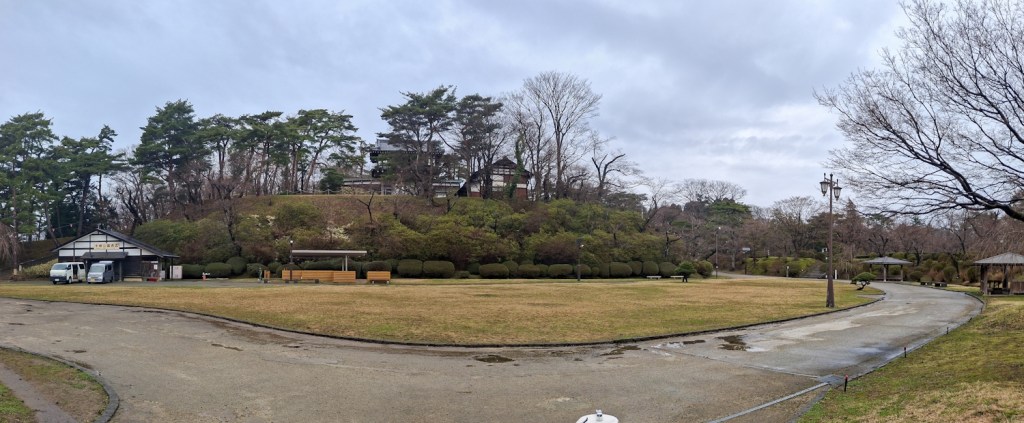
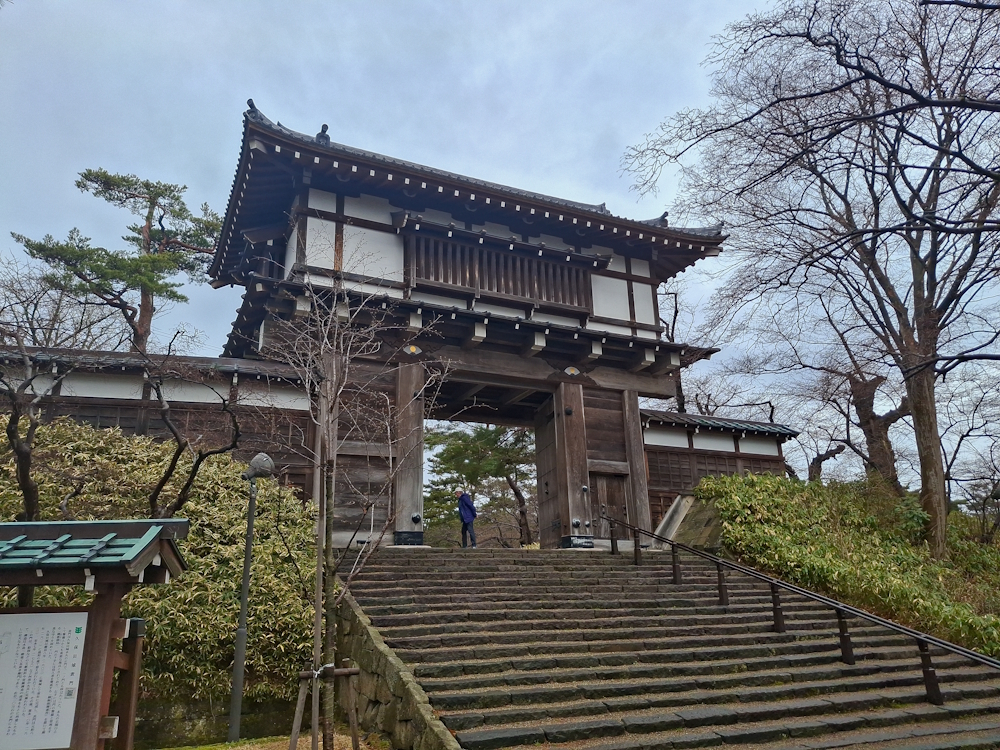
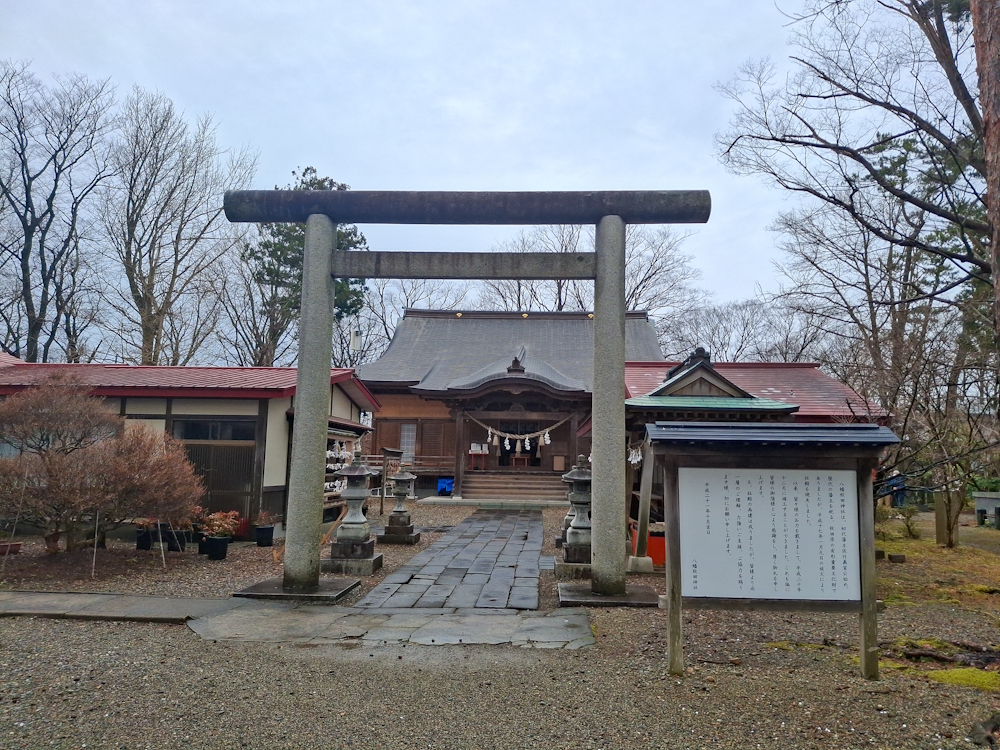
The city restored the main gate and a corner tower, but none of the main “castle”. However, there are memorials and shines here. Below is the shrine to the Satake family.
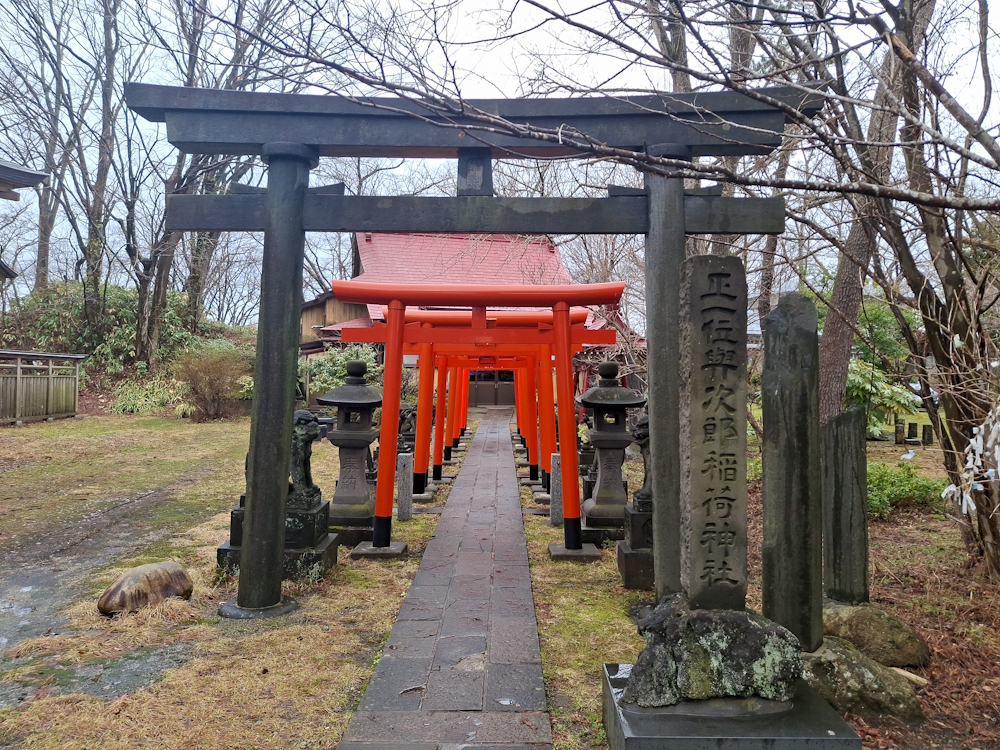
And here is the path to a shrine to Inari, a fox spirit in charge of fertility, rice/sake, agriculture and industry. Seems a diverse portfolio for someone that prances around in fox cosplay.

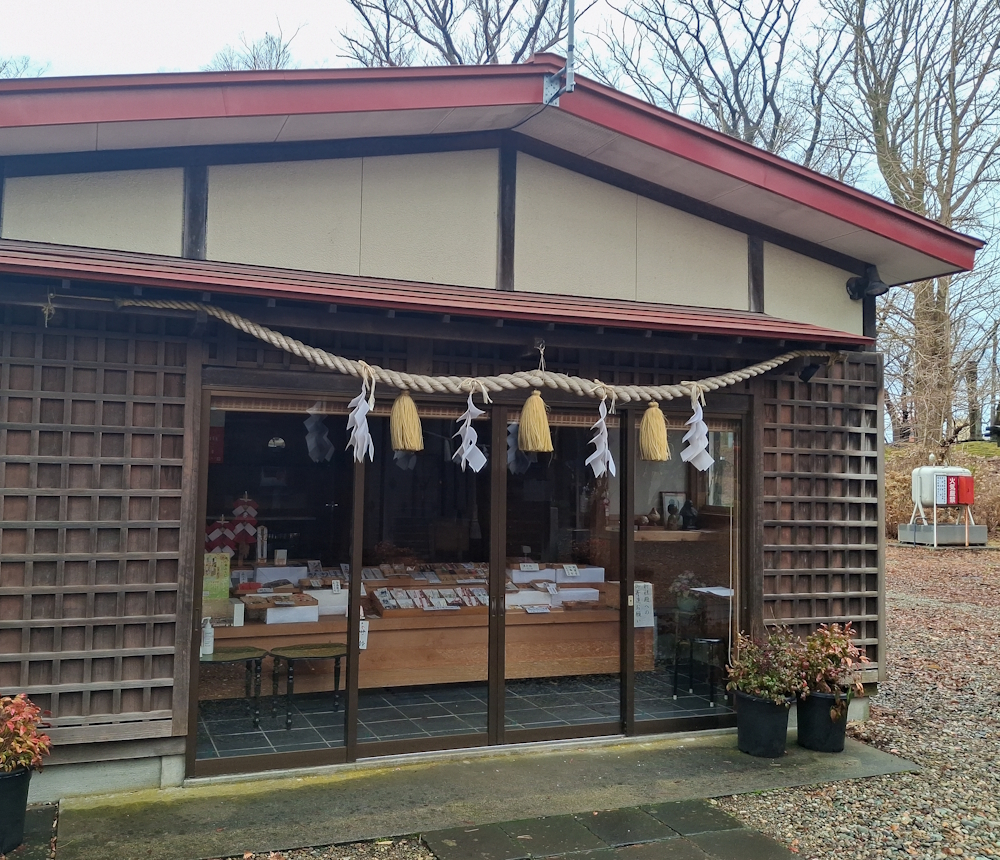
Our guide gave me some information about the rope that hangs in front of sacred objects. The rope represents the sky, the ripped fabric or paper are lightning bolts and the tassels represent rain.
It was getting cloudy again and the temperature was dropping. It’s time to get wet.
A “sento” is a communal bath with essentially heated tap water, while an “onsen” is a communal bath with naturally heated mineral water. There are thousands of resorts in Japan built around such hot springs, which is a nice side affect of living on an island chain with over one hundred active volcanoes.
I initially thought the ship reserved some time for foreign cruise guest this morning, but no. This place was open for normal business. Reception gave us two towels: a regular dry-yourself-off towel and a smaller wash cloth. Shoes are taken off first and left in lockers or on a rack. You then enter locker rooms and remove the rest of your clothing. This onsen did not have mixed bathing.

Since these baths were in general use, and we six male cruise guests were outnumbered by the local Japanese, I have no pictures of the inside. Therefore, a general explanation:
- Warning – no tattoos allowed in this onsen; in Japan, tattoos are associated with gangsters
- Along one wall is the cleaning area; you don’t use the baths to clean yourself
- There are about a dozen cleaning stations, with a spigot and hand-held shower head; be careful not to splash your neighbor
- I did not realize you treat that station like at home; there were folks here shampooing their hair and even shaving
- After getting clean, enter the pool of your choice
- There were three indoor pools separated by temperature. I started in the 37 degC (98 defF) pool, then moved to the 42 degC (107 degF)
- The outdoor pool did not have a temperature gauge, but was too hot for me anyway
- Next to the outdoor pool were three stone “lounge chairs”, complete with stone pillow; the hot water flowed over you as you relaxed
- At least “relax” if you were standard Japanese height; the pillow hit my lower shoulder blades
- Leave the wet room, dry yourself off, dress and enjoy the cafe in the common area
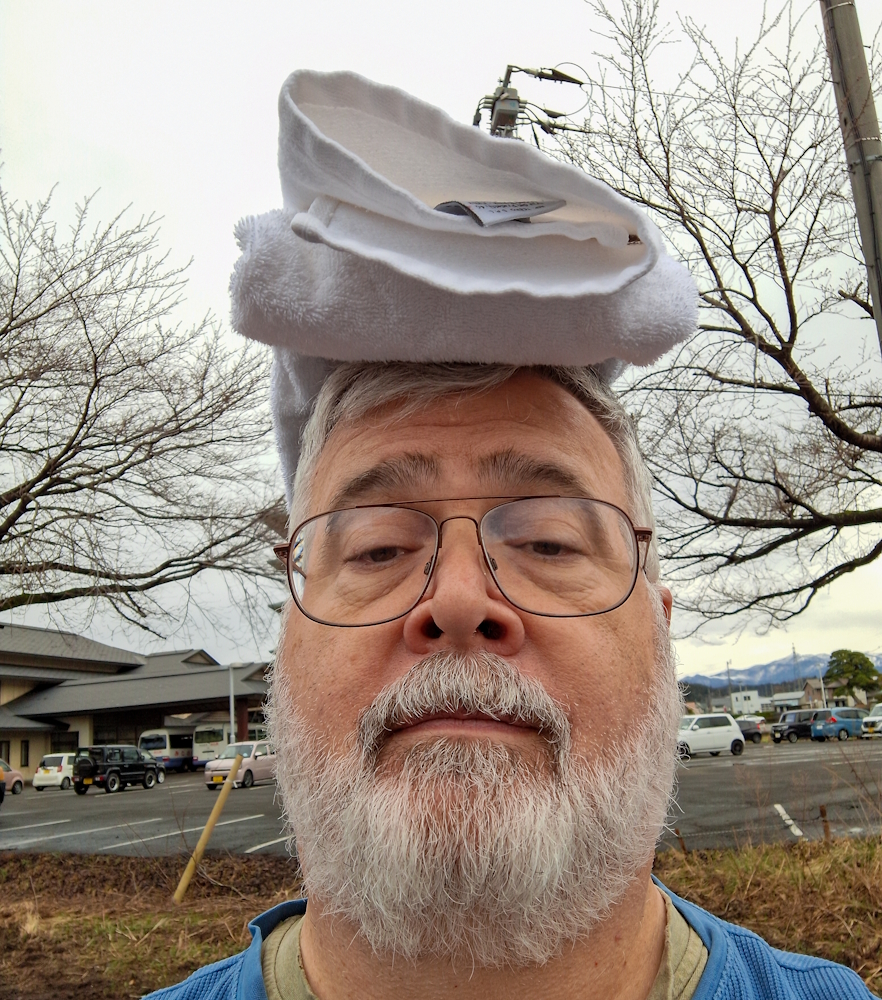
I had a great time. One of the pools had some kind of grey mineral that caused me to not be able to passively sink all the way. PS: you do not take the wash cloth into the bath with you; either leave it outside or wear it on your head.
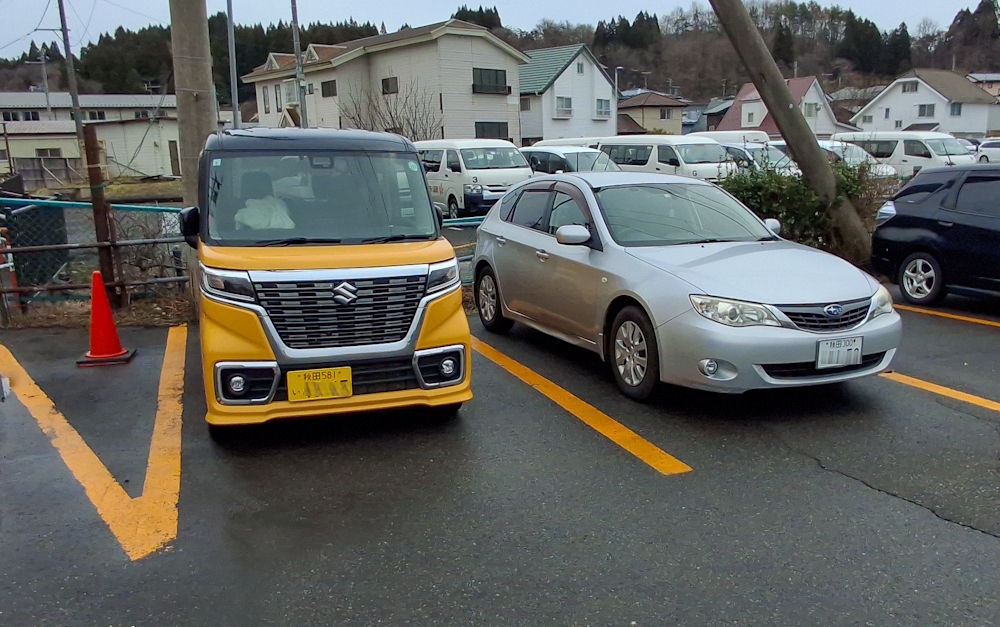
Leaving the onsen our guide explained the different license plates we’ve been seeing. The yellow plate are for cars with small engines and smaller size; white plates are for larger, more powerful cars. The yellow plated cars get cheaper insurance rates and registration fees.
Tidbits:
- Rice is planted in April/May and harvested in September; there is only a single season
- You see a lot of Toto plumbing in Japan; they are known for their top-end, remote-controlled toilets. In Akita I actually found an “old fashioned” push button version – a sign about how small the ports we are visiting are.
- Our guide showed us pictures of her wedding. The kimono she wore is reversible; white on one side, vivid colors on the other. Her makeup cost $1000, but that includes a person to help her with traditional wigs and moving around during the wedding and ceremonies. The kimono cost $10,000 to rent for one day. It would cost $100,000 to purchase.
- All of our guides on the west coast were complaining about dust storms coming from mainland Asia. One said it’s not worth washing their car so much dust comes every day.

