Silversea offered a free day trip to Kyoto for the Grand Asia Voyagers. I spent several days in Kyoto in 2019, so I was thinking about not going. However, the itinerary was mostly places I have not visited yet, so what the heck.
We started with a 15-minute ride on the Shinkansen, the “bullet train”, from Osaka to Kyoto. It wasn’t really needed, but now everyone can say they checked that box from their travel list. We then boarded buses and went to the Sanjusangen-do temple.
This was another “no pictures inside” temple, so I have nothing to show you. However, the last two pictures on the Wiki page gives you an idea. And the images aren’t very good, so I guess that means most people follow the rules.
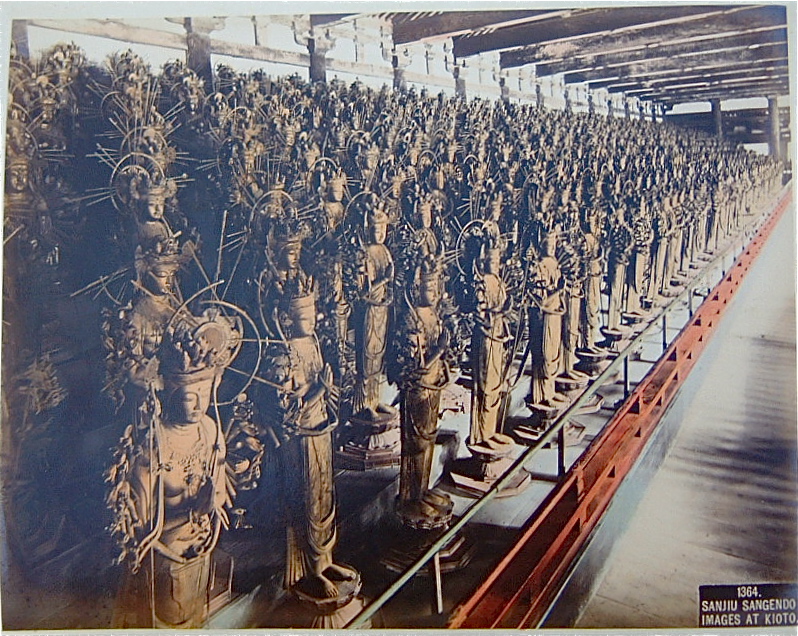
The temple is know for its 1001 statues of “Kannon” a bodhisattva (think “saint”) of compassion and mercy in Buddhism. All of the statues are carved from Japanese cypress, so I expected to hear the originals have all burned down and these were plastic replicas. There was a fire… in the 12th century. 124 of the originals were saved and the remaining 876 were remade in the 13th century. 700+ years; yeah, I guess I’ll give them a pass.
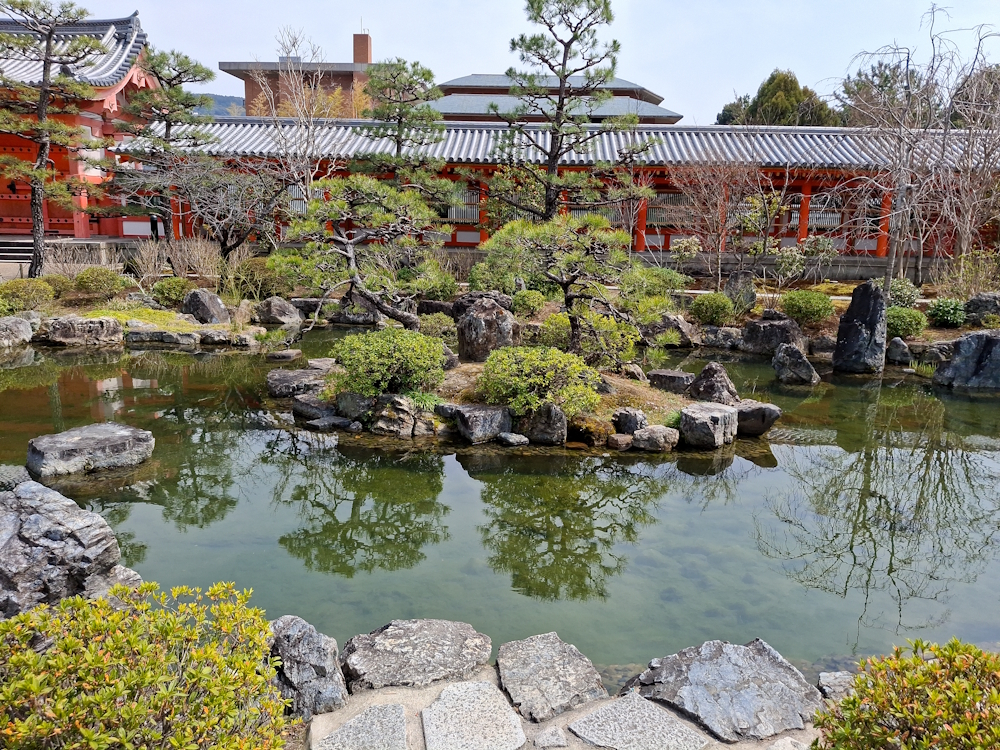
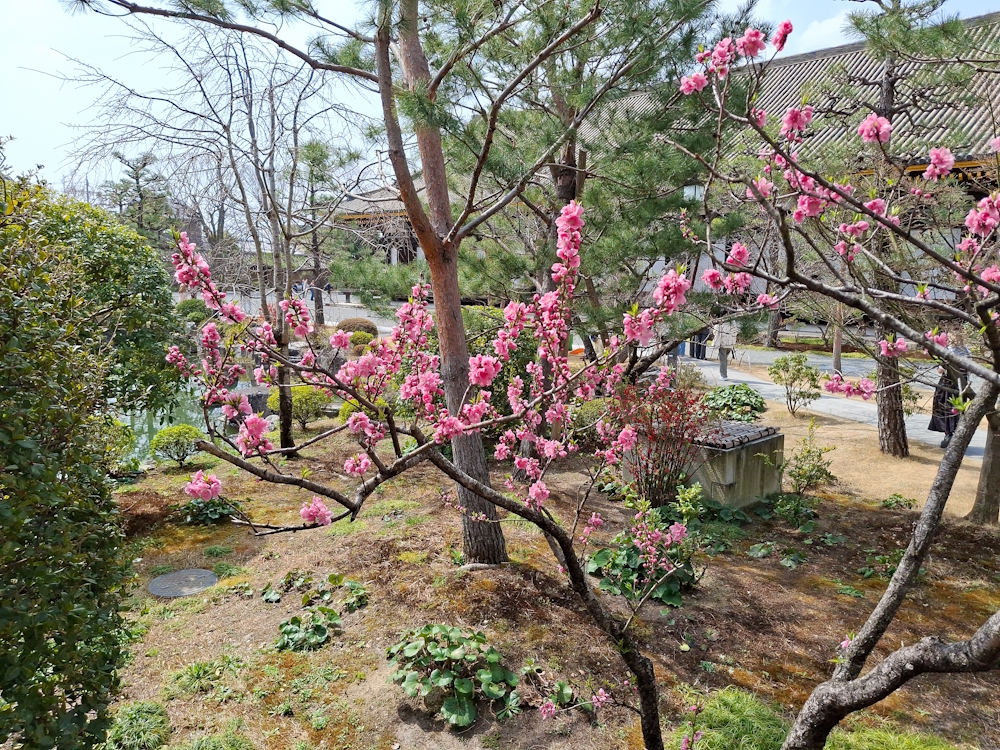
Side note: since the building is over 100 meters in length, in the past archery tournaments were held. Our guide showed us arrow holes in the doors. The competition is still going on, mostly by women. Here are some shots of the garden.
We then had lunch in Sodoh, which is the same place we ate in 2019. This time we had the geisha visit us here. In the below image from left to right: maiko, geiko and geiko (remember: in Kyoto “geisha” are called “geiko”). The “maiko” is an apprentice geiko.
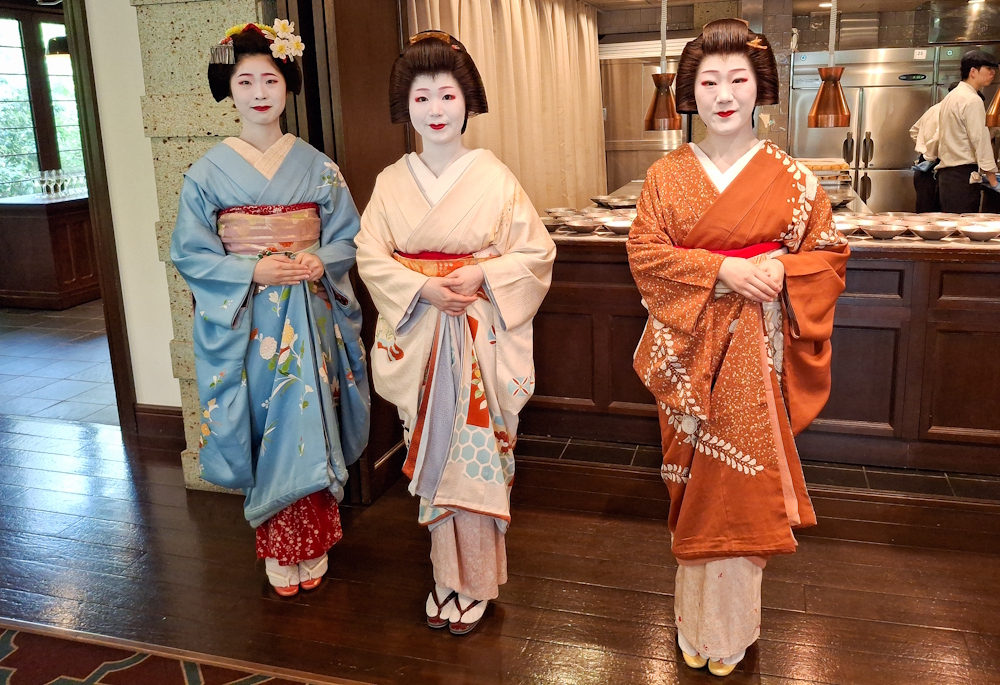
I will repeat my “how to identify maiko vs geiko/geisha” notes from 2019. Maiko will have:
- Colorful kimonos
- Red on the collar of the inner kimono
- Fancy headpins
- Wear a long obi (almost a cape)
- The sleeves on their kimono are much longer
- They must style their actual hair (geiko can wear wigs)
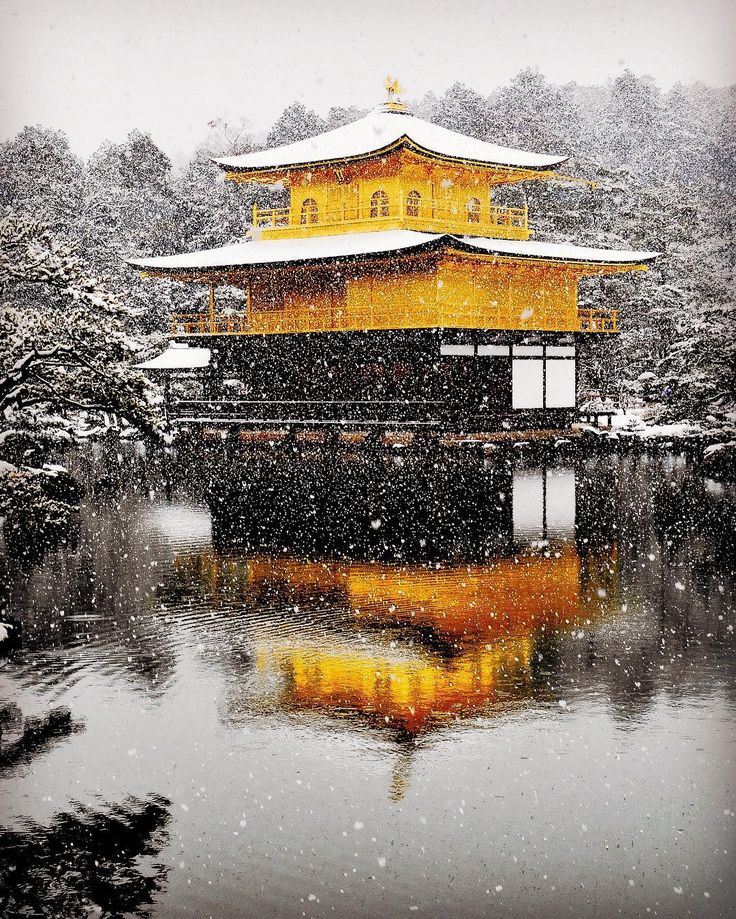
After lunch we did a quick stop at the Golden Pavilion, which I visited last time. But it’s so amazing I can’t complain.
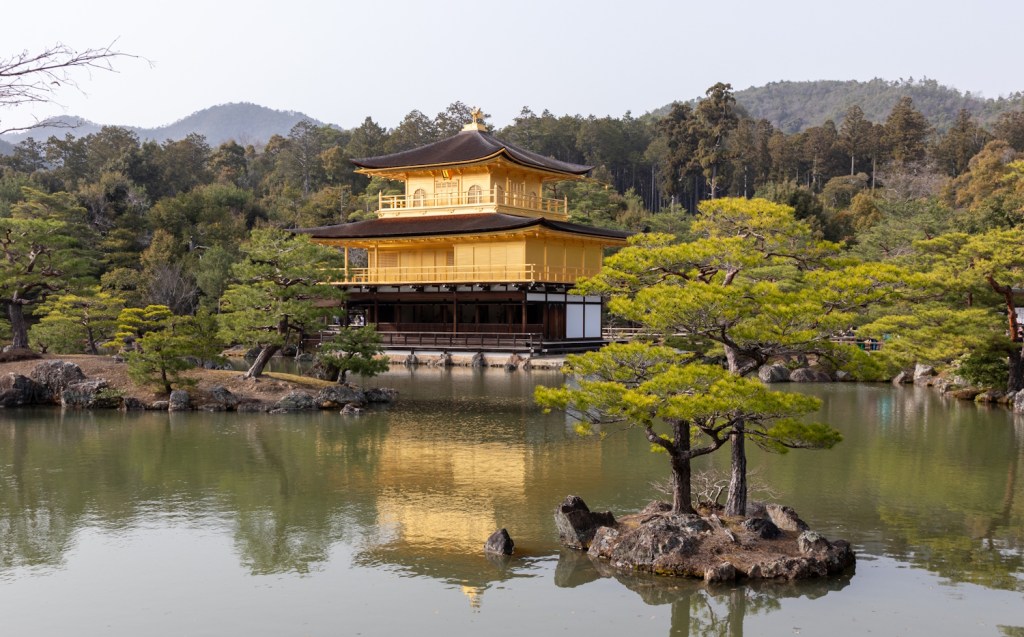
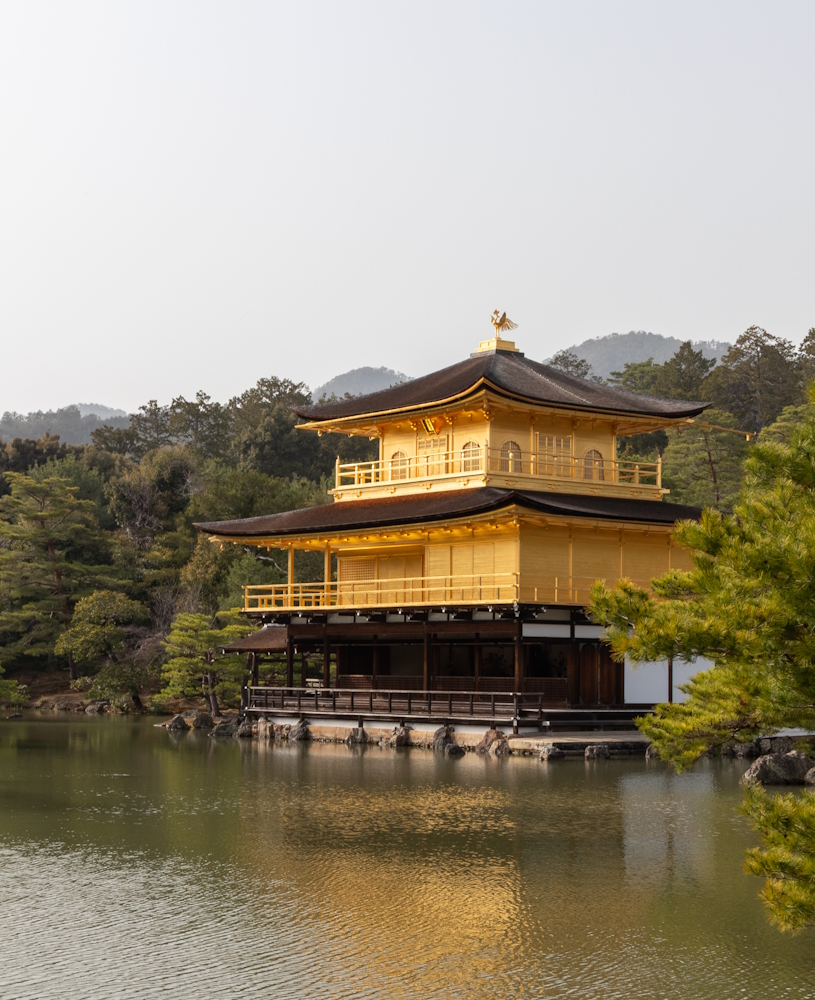
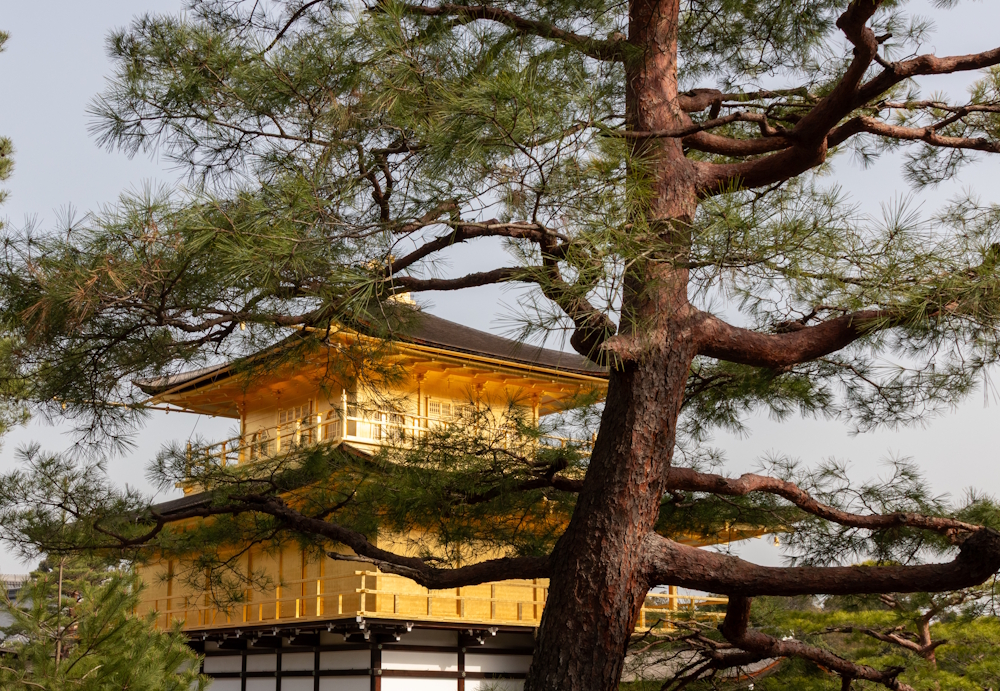
They had a poster of the Pavilion in the snow, so I stole an image from the internet. It almost makes me want to come back here in winter.
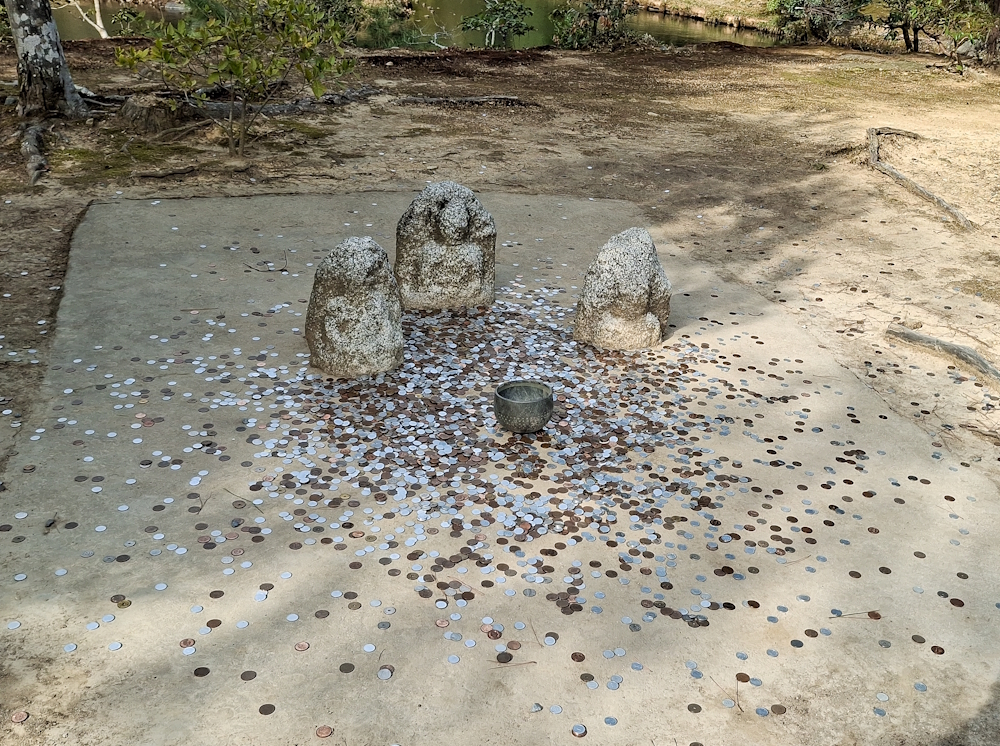
Walking thru the park I found another example of the “pitch a penny” aspect of Japanese culture.
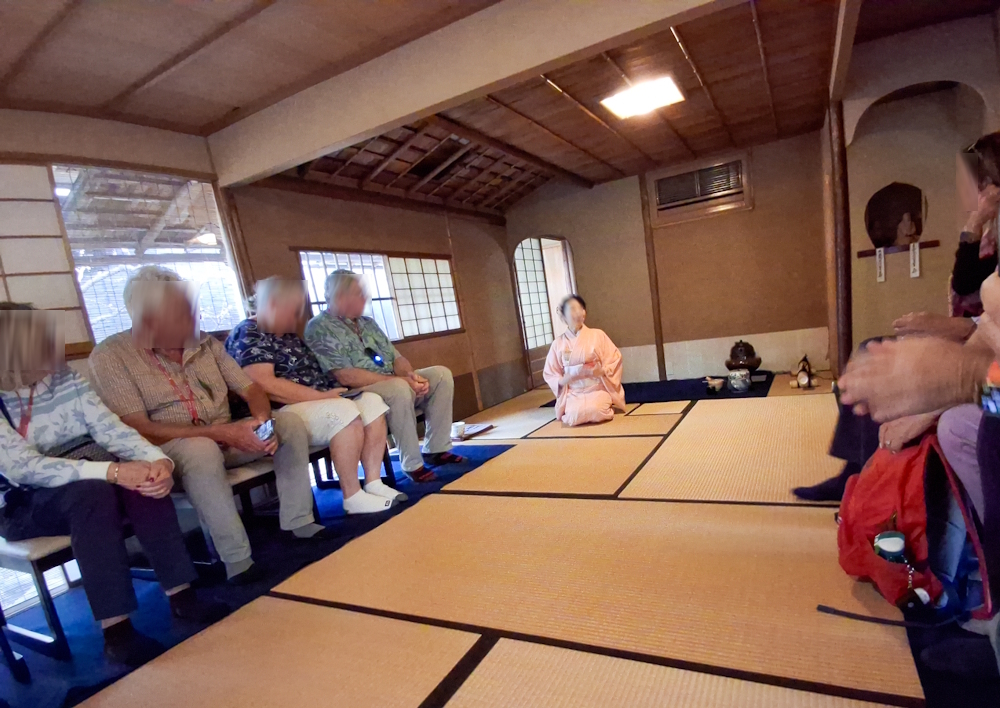
Then it was classroom time. We arrive for lessons on the Japanese tea ceremony, flower arranging and meditation.
My part of the group got chado (the way of tea) first. We got the abbreviated 15-minute version rather than the 4-hour formal. We were very happy. My big takeaway was “slurp the last sip”. Challenge accepted.
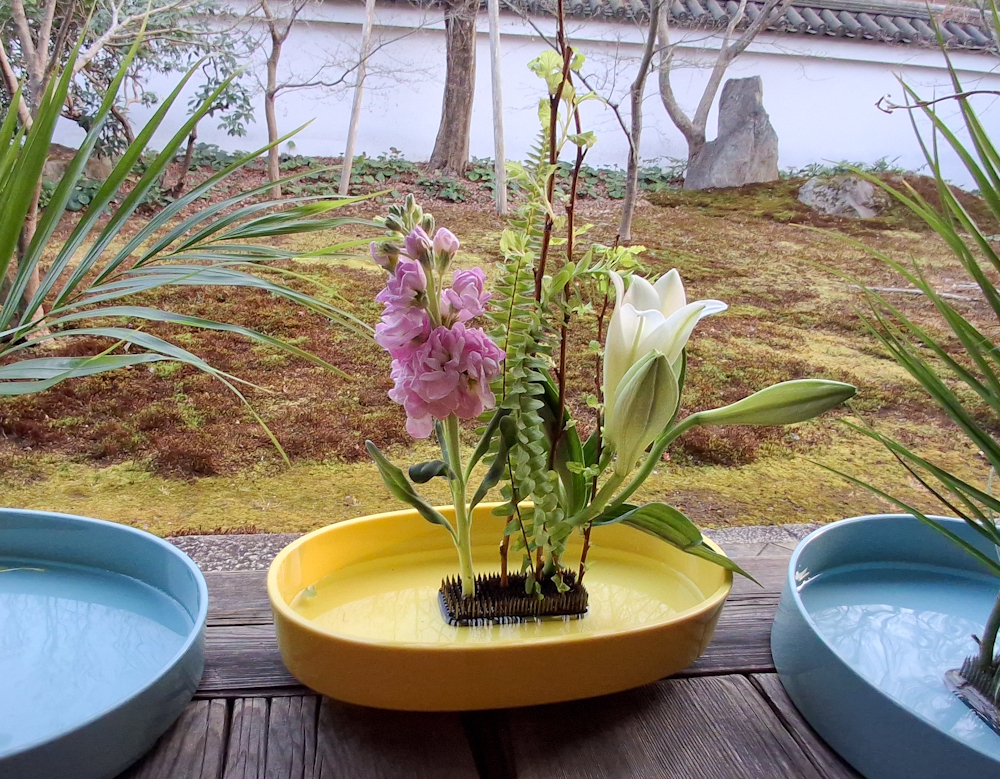
Next was ikebana, or flower arranging. The focus is on:
- As opposed to arrangements that are in the middle of the table (and thus are looked at from all angles), ikebana has a dedicated “front”
- Line and space
- Asymmetry
- When possible, use flower buds that will bloom in the days after arranged
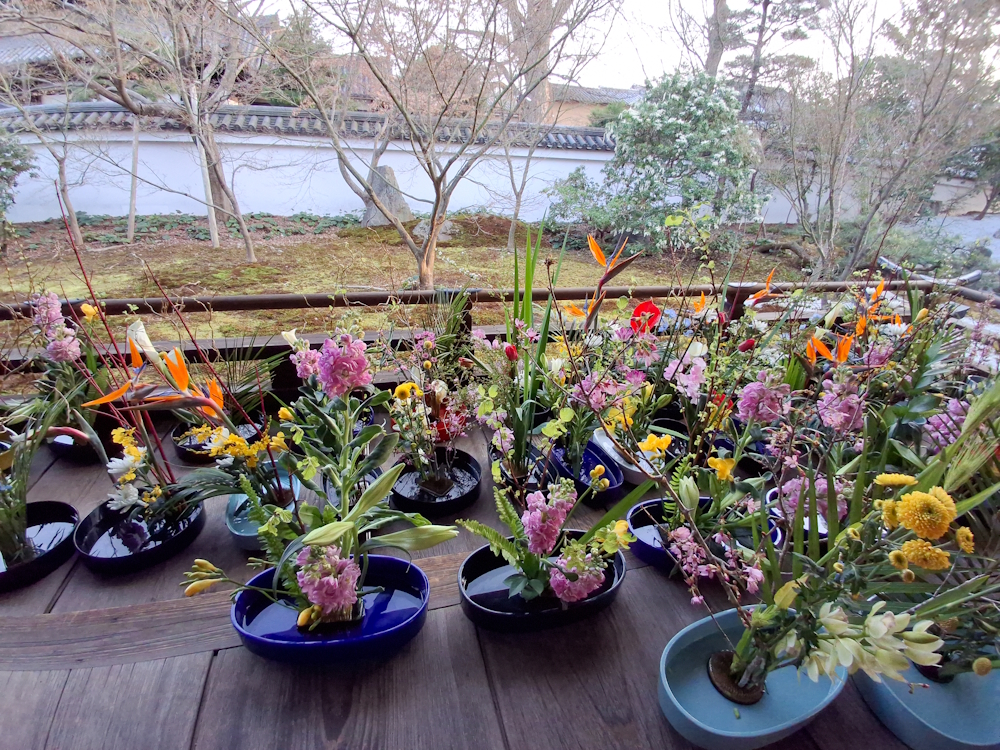
I hope they get a discount on the flowers, we had almost 100 students in total.
The last class was meditation, but since we were in the actual temple no photography was allowed. But relaxation was had be all.
A great day, but we didn’t get back until 8:00pm. We have five consecutive port days, so I may get behind on my daily posts.
Notes:
- Japan requires that we carry our actual passport when we leave the ship – not even China did that
- Kyoto was not bombed during WW2, so it has far more old buildings than other cities
- I’ve fallen in love with the sauces the Japanese cook with
- In the Kyoto/Osaka region you can say “thank you” with “okini”

