After two days at sea upon leaving Panama City we docked in Guayaquil, Ecuador. This is not my first visit, as I used Guayaquil’s airport as I went to and returned from the Galapagos Islands. But this is the first time I got to be a tourist.
After an hour bus ride (shortest so far this cruise) we arrived at the Hacienda El Castillo, which is (among other things) a chocolate plantation. Upon showing up we were taken to the main house (the owners live there on weekends) and served fresh squeezed cacao pulp juice. It was amazing – just sweet enough to enjoy but not so much to be confused with a kid’s drink. I’ll talk more about this later. This came with plantain chips and spreadable cheese. Perfect with the slightly sweet drink.
We then walked out to the plantation and saw the cacao trees. They can grow as tall at 10 meters, but farmed trees are kept at 3 m for ease of collecting the pods.
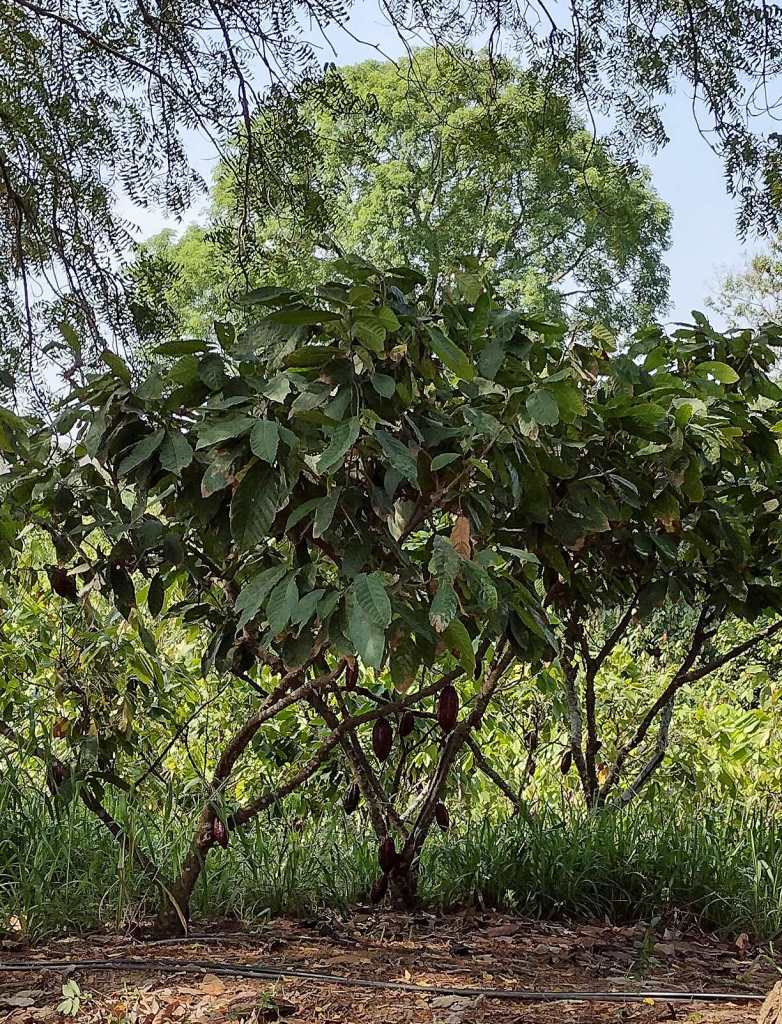
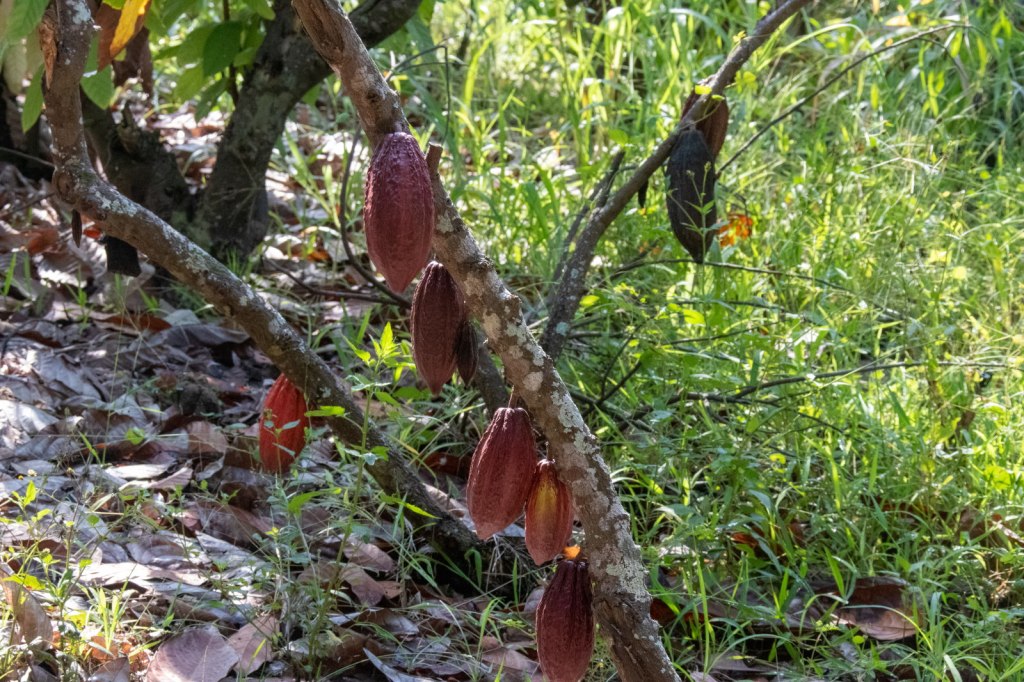
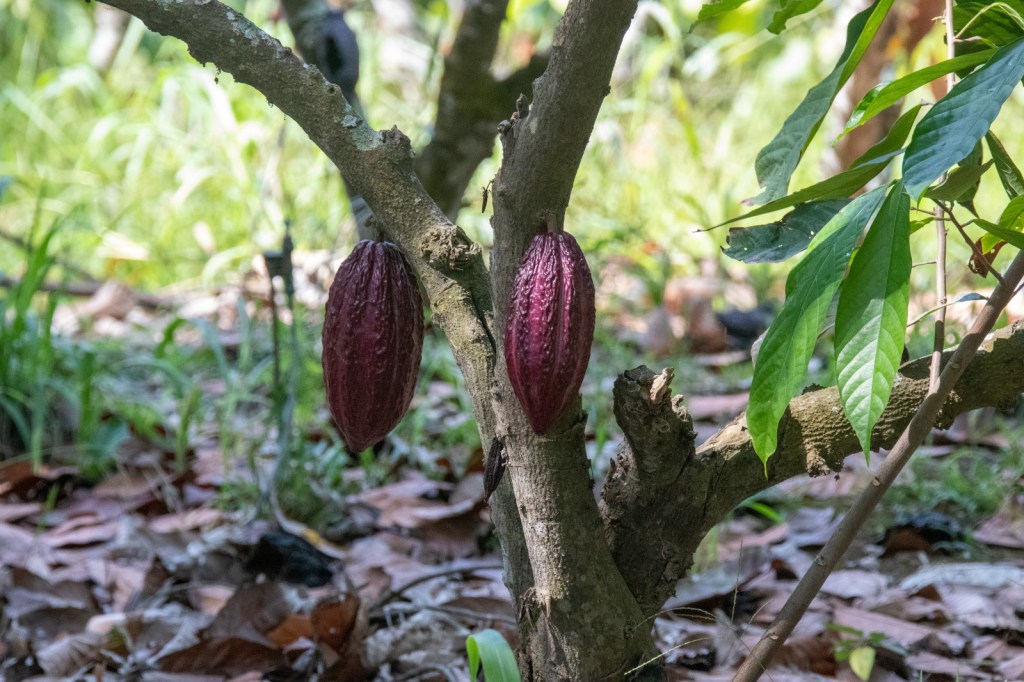
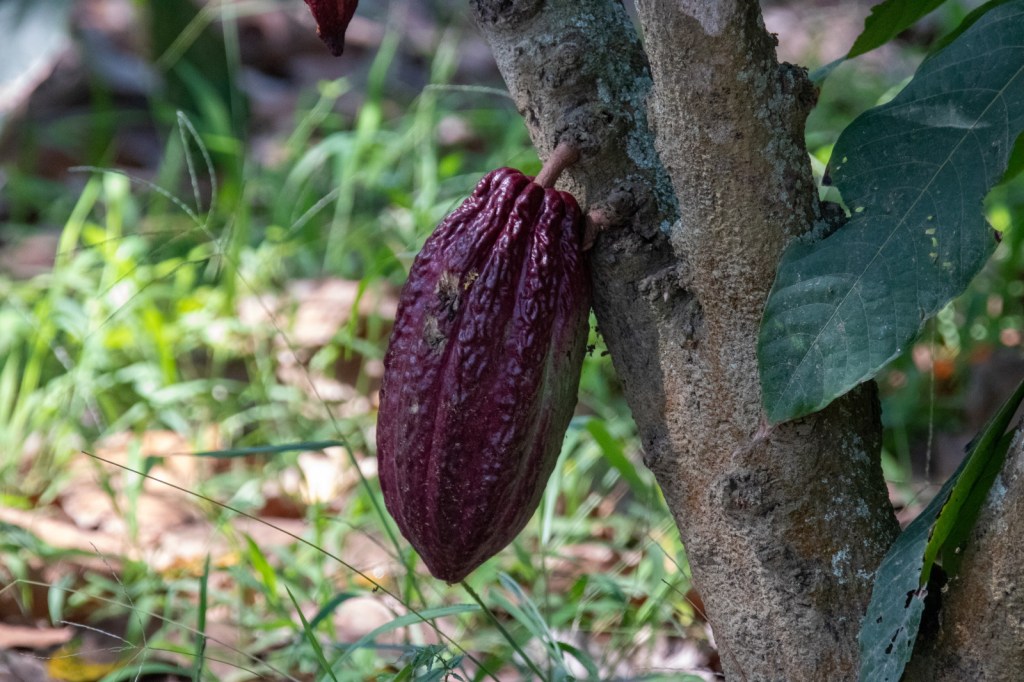
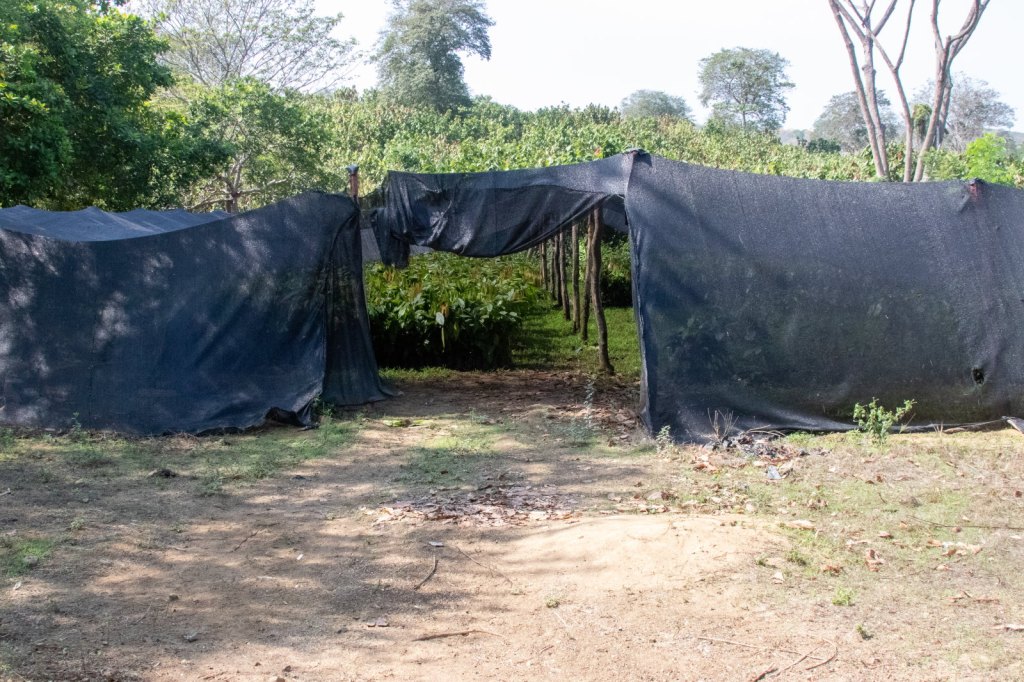
The trees can grow pods at commercial rate for 20 years and are then removed and replaced. The “greenhouse” hosts new trees for three months when they are then grafted with cuttings for the plantation’s most productive tree. A few months later they are planted where the old trees were removed.
The pods are about one-third the size of a human head, with an outer rind almost 1 inch (2 cm) thick. Inside are the seeds, surrounded by pulp.
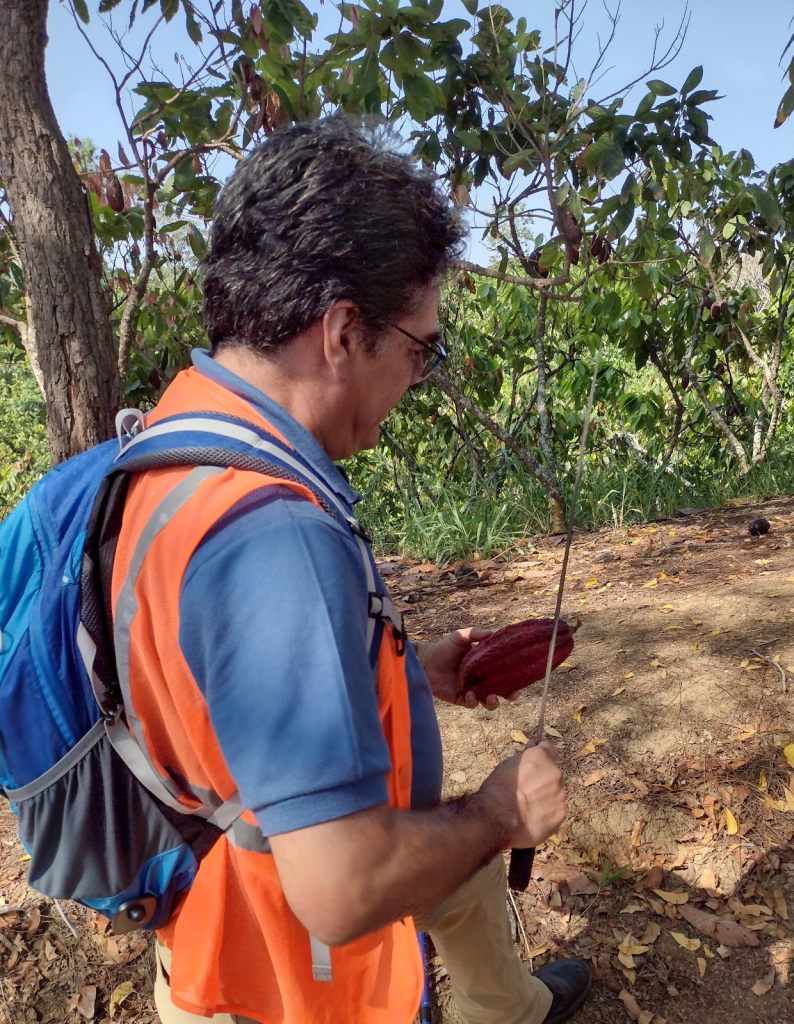
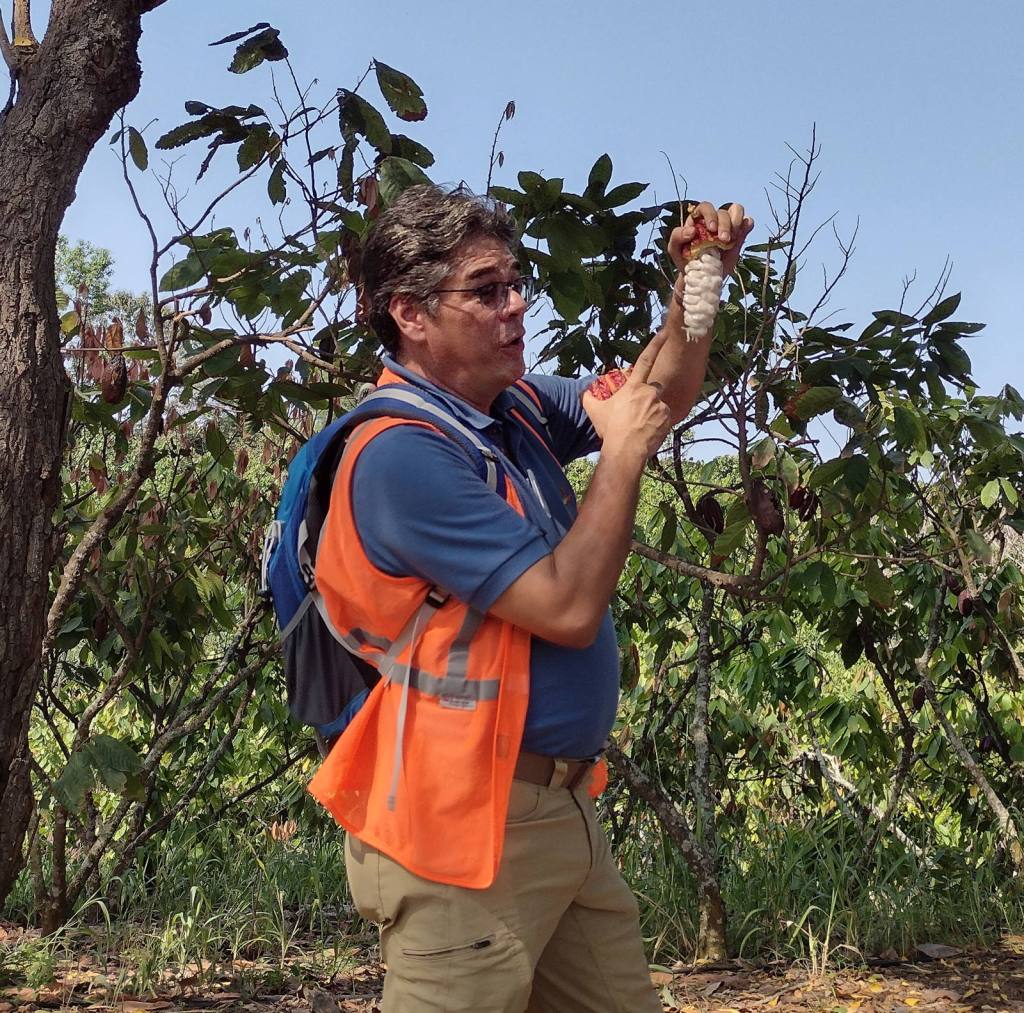
We were shown two varieties of cacao: the original is ripe when the pod is yellow, while the newer variant, grown to be more resistant to pests, is ripe when red. All must be harvested by hand, and then taken to the drying area. First, they are bagged together and allowed to ferment for around four days – that increases the taste of the seeds. Then they are spread out and dried by the sun.
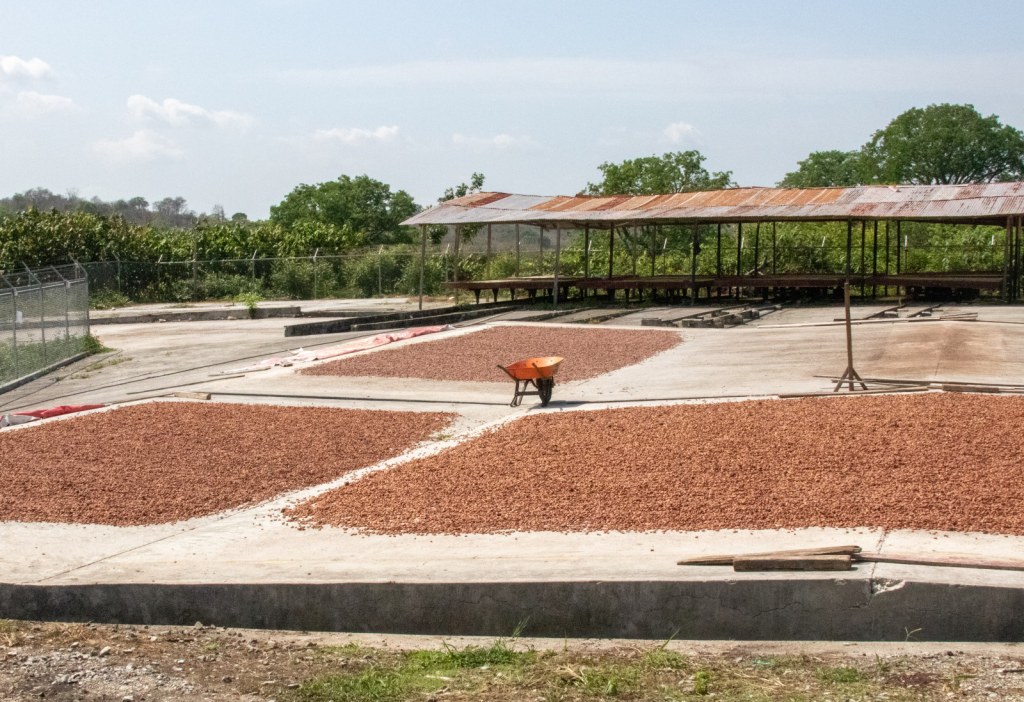
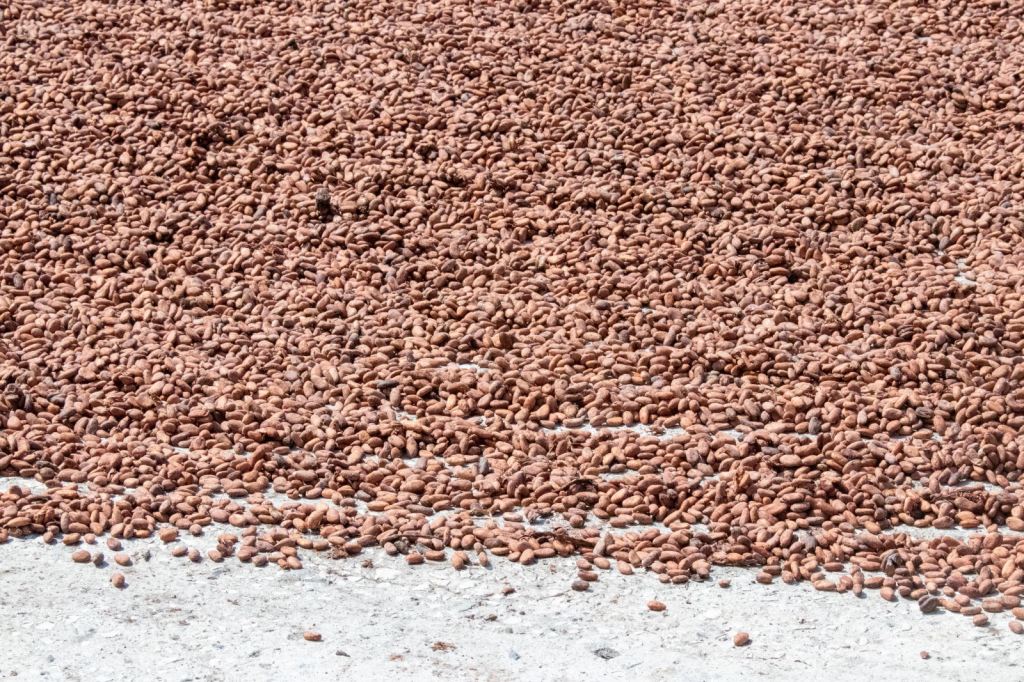
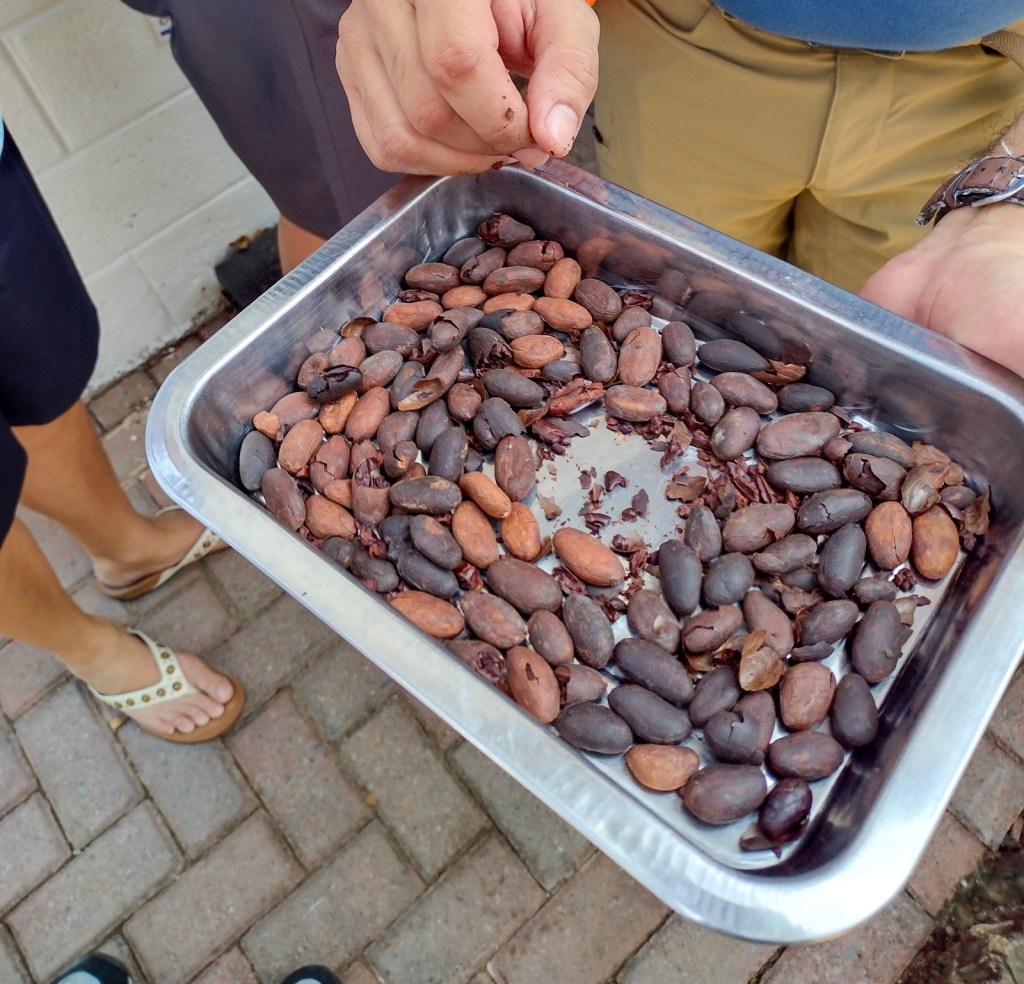
Then the beans are gathered and processed into various types of chocolate. We could not go into the actual processing building as they were working, but we tasted the “nibs”, which are the dried beans. There is not yet much of an expected chocolate taste yet.
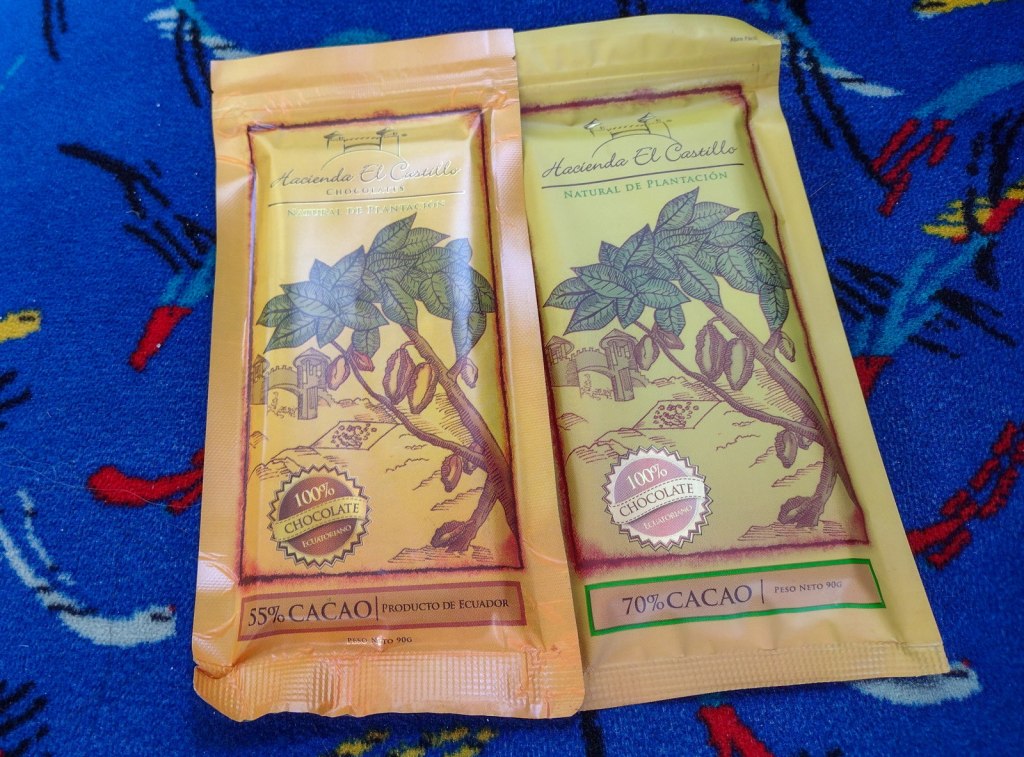
We sampled 100%, 70%, 55% cacao and milk chocolates. I preferred the 70%, but bought it and the 55% to “test later”. I have a bet with myself on how many days they will last.
Those of you reading carefully will see a disconnect. How can you get cacao pulp juice when the pulp is needed for the fermenting process just before drying? You only have pulp available when the pods you harvested are going to provide seeds for new trees rather than chocolate.

