Not far from Post Office Bay on Floreana Island is Cormorant Point. Ironically, it is not named for the Flightless Cormorant bird, but for a ship of the same name that visited the area.
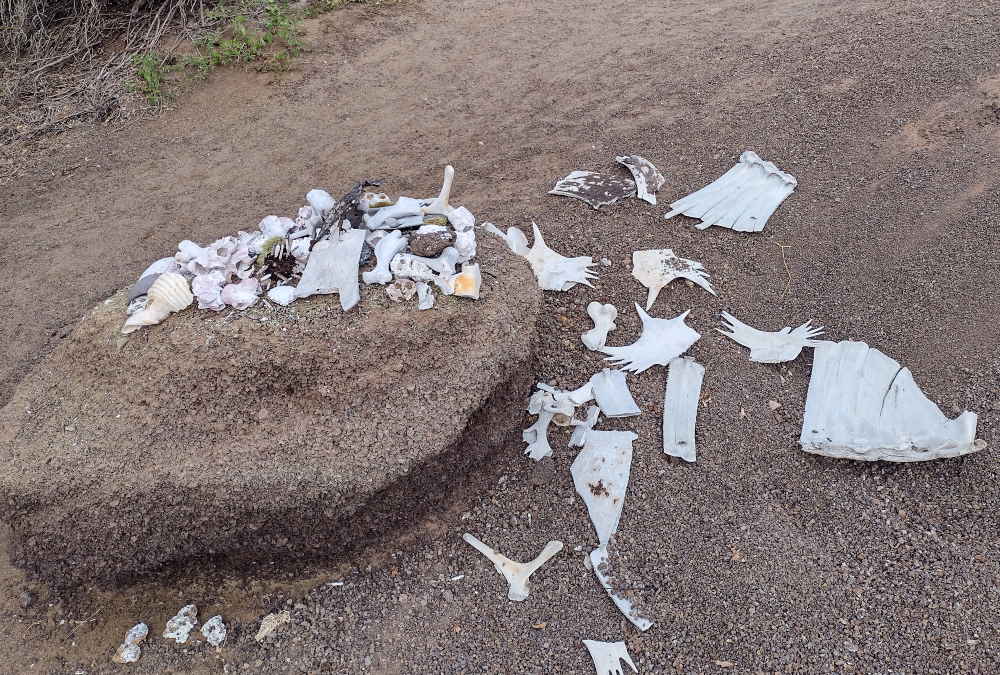
We started the visit with a wet landing on some annoyingly soft sand. It had an interested green tint due to the volcanic material. Here our guide started with a pile of bones. Sea Lion ulna, dolphin jaw; the pointy bones in the sand are Sea Turtle plastron (bottom of shell). Remember: the shells of turtles are not outside of the turtle; they are the rib cage.
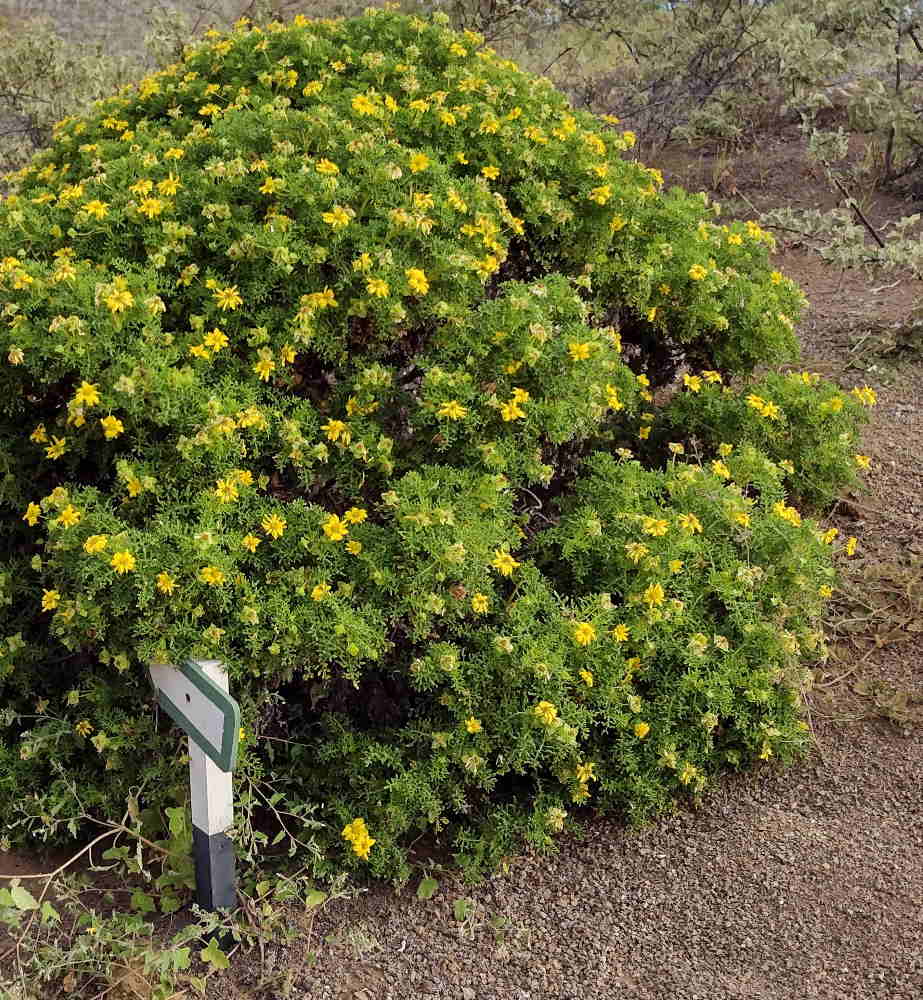
The bright green and yellow plant was identified as Beach Daisy. It is one of the few plants in the Galapagos that stay green year around. Flowers here are white or yellow to attract the few pollinating insects. The Carpenter Bee is the big lifter.
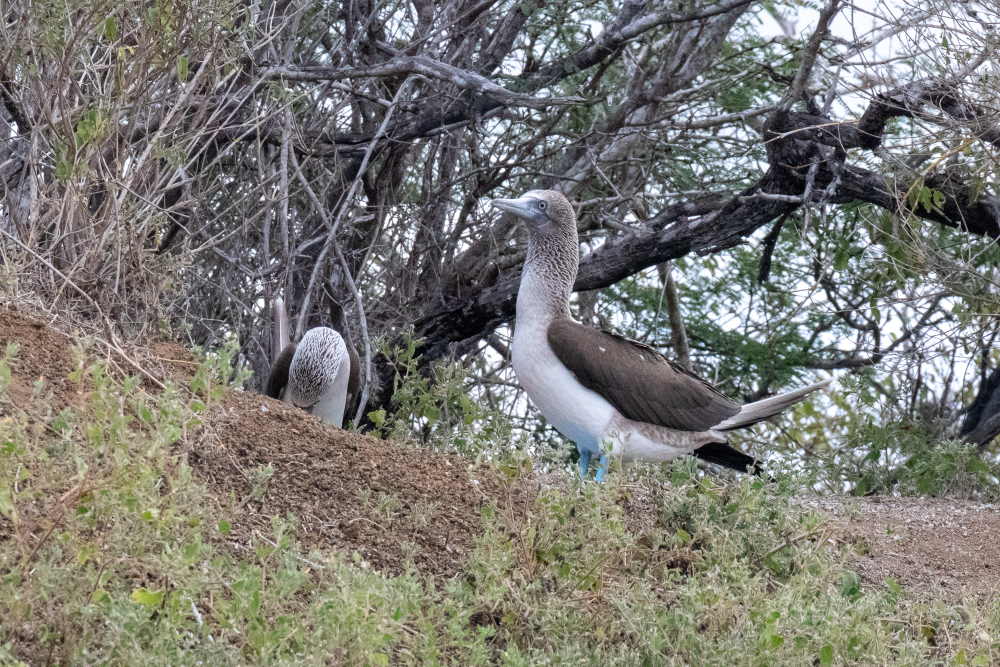
On the edge of the beach is the obligatory Blue-Footed Booby. It’s actually the least numerous of the boobies. Seems it nests and hunts on the shoreline, so it is observed much more often. I haven’t seen Red-Footed Boobies since the first day, but they have the highest population.
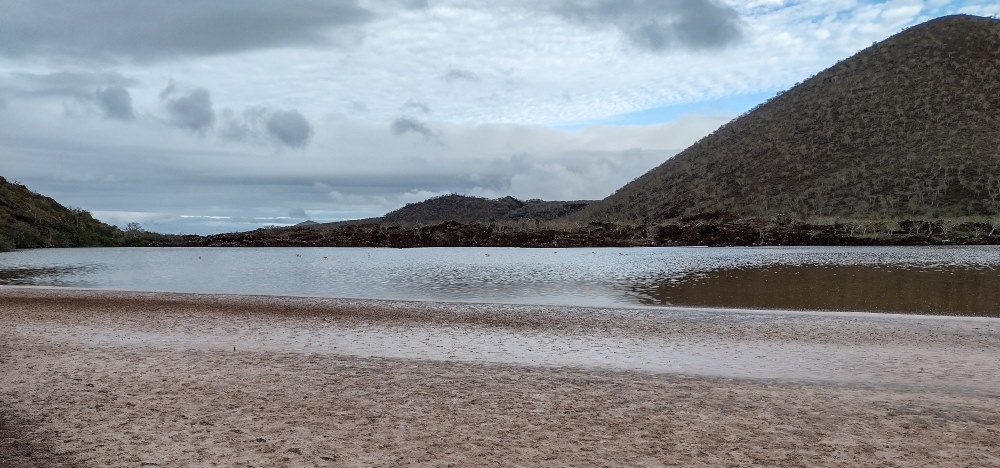
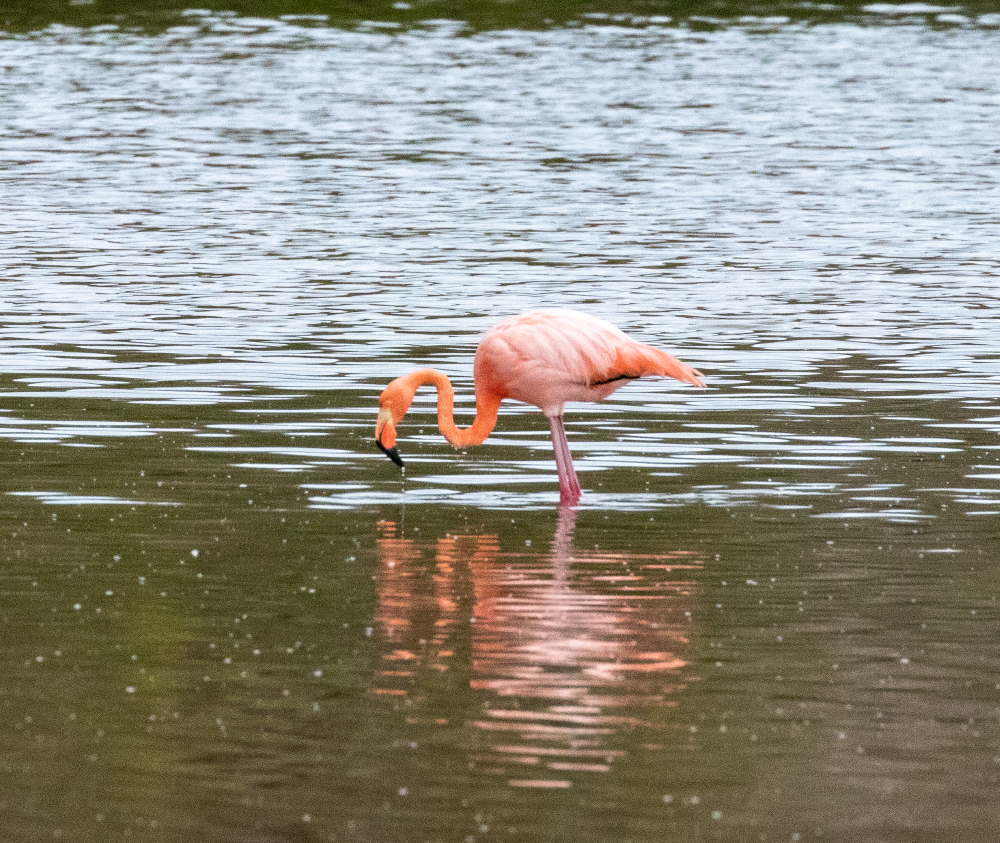
We did a short hike to a salt-water lake. It is not a tidal pool; the ocean just “leaks” thru the stones to keep it full. Here were about 10 American Flamingos. As opposed to other flamingos, these do not migrate. They may jump from island to island within the Galapagos, but they never leave. There are only a couple of hundred Galapagos-bound flamingo. These were kind of far off, but one finally got a little closer. Fun tidbit – the bill of a flamingo floats
We then walked to the other side of the island to view a Sea Turtle breed ground. It’s out of season now, but the guide used it as a teaching point. Hundreds of turtles arrive here. Each turtle lays about 100 eggs. After 100 days the baby turtles dig their way out. Only 5% make it to the ocean due to land predators. Within the ocean only 1% make it to adulthood due to ocean predators. Mother Nature is a stone-cold bitch.
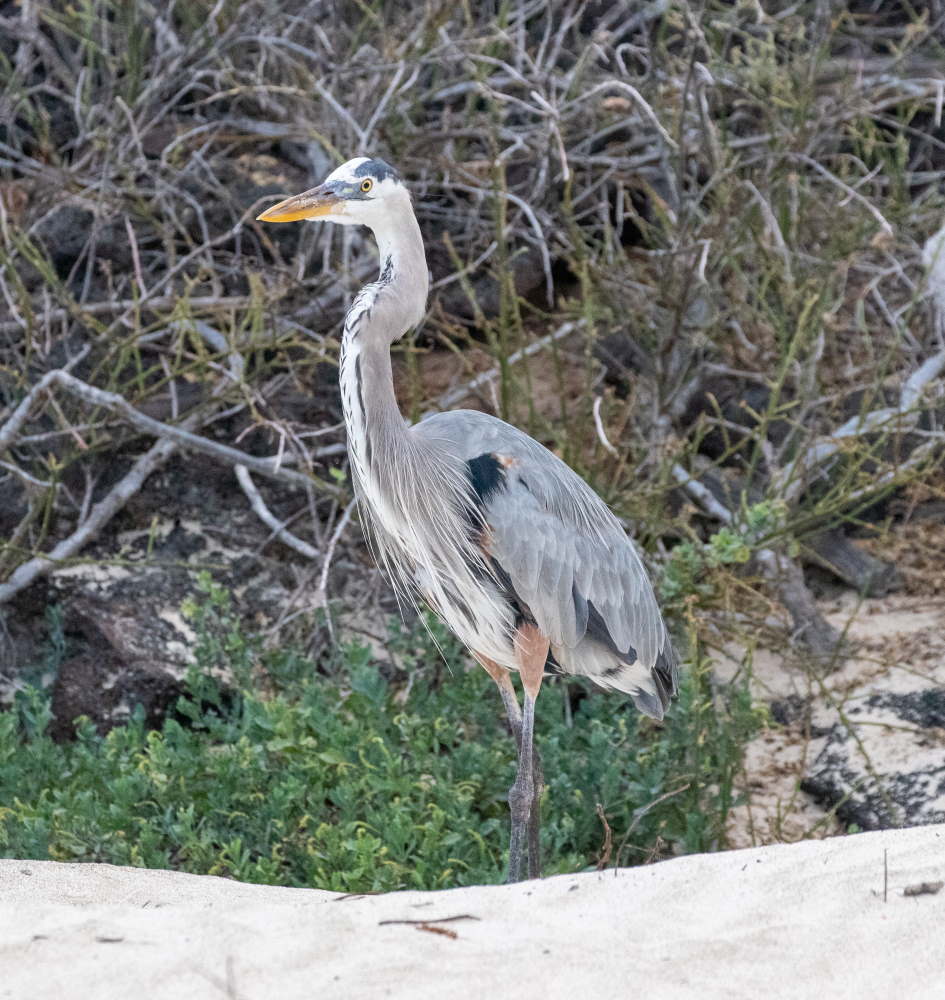
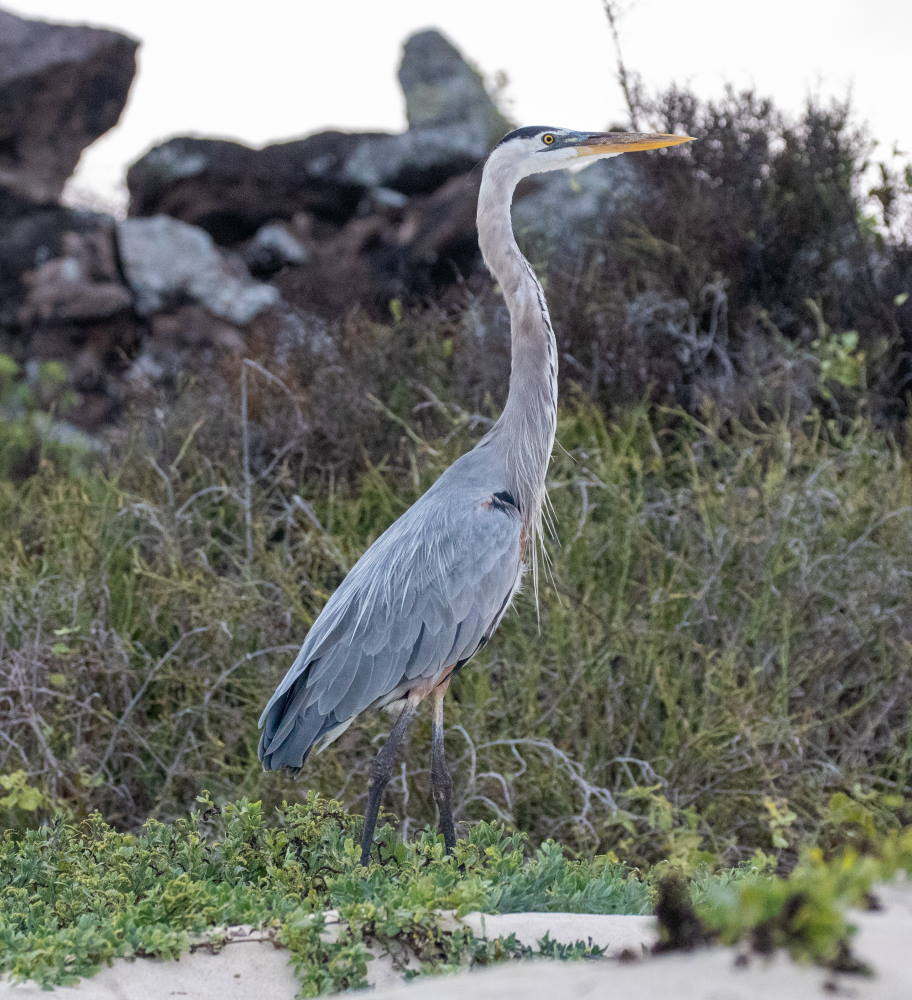
Here was a Great Blue Heron waiting for the next batch of eggs.
 Cruise Boy