Location: Kyoto, Japan
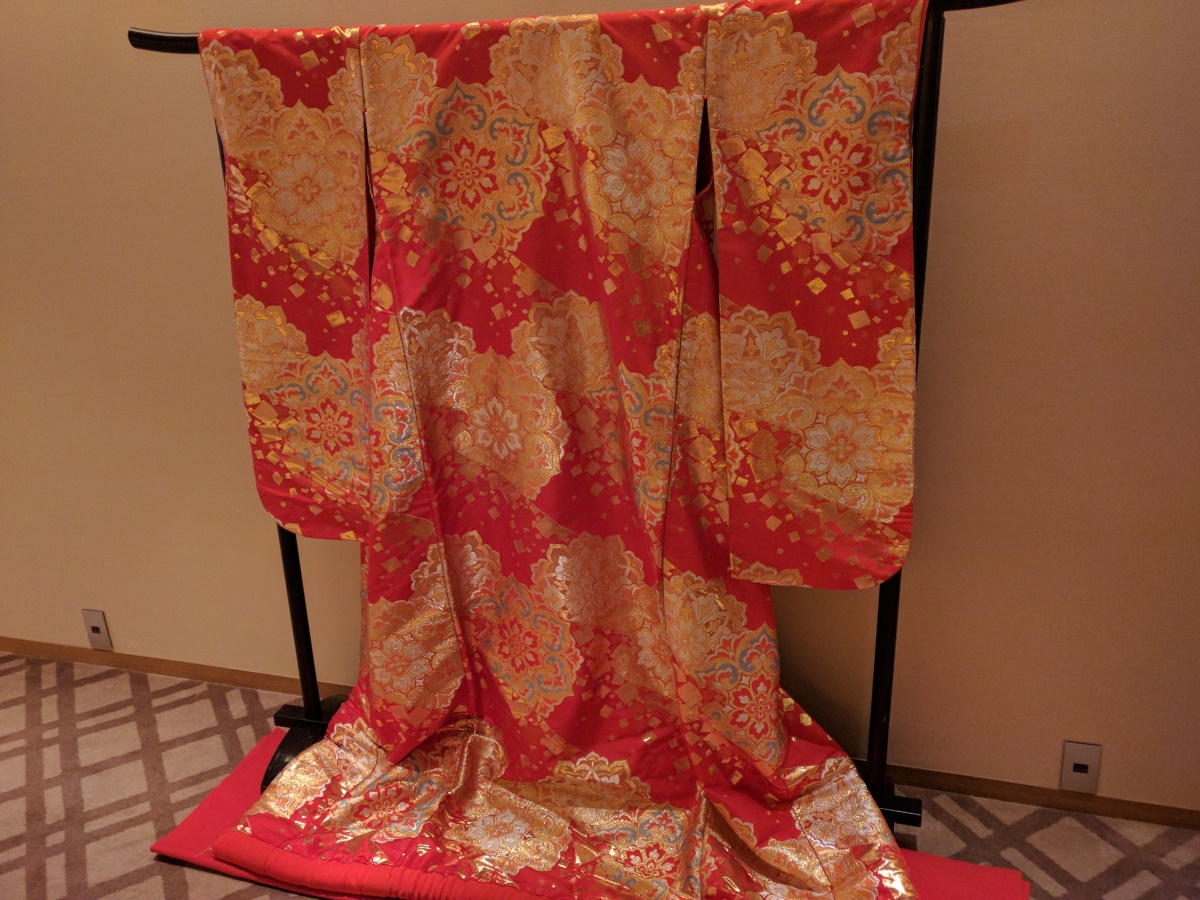
In the morning I walked downstairs and saw that the hotel had a kimono on display. It tells you how a people feel when they display clothing as art.
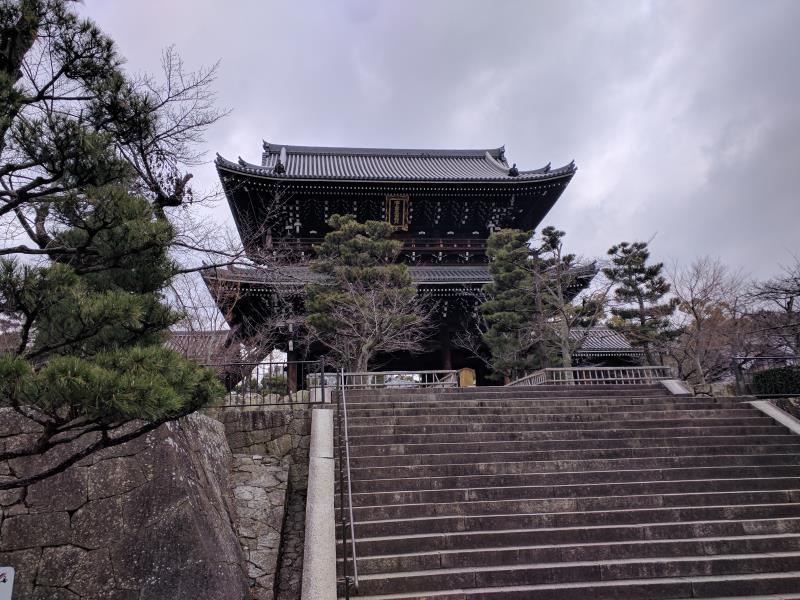
We boarded buses and traveled to the Konkaikomyo Temple. We had the option of scaling the stone stairs to the main gate or taking a shuttle bus.
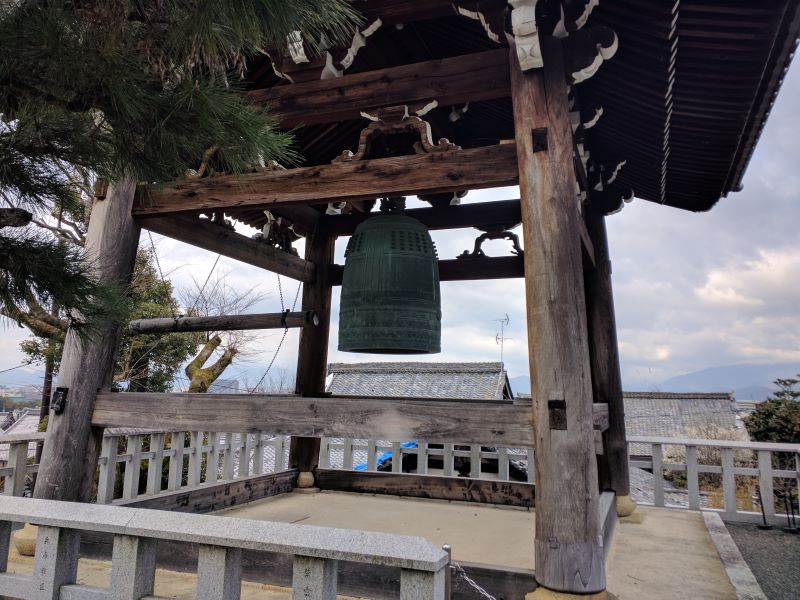
Behind the gate was the bell tower.
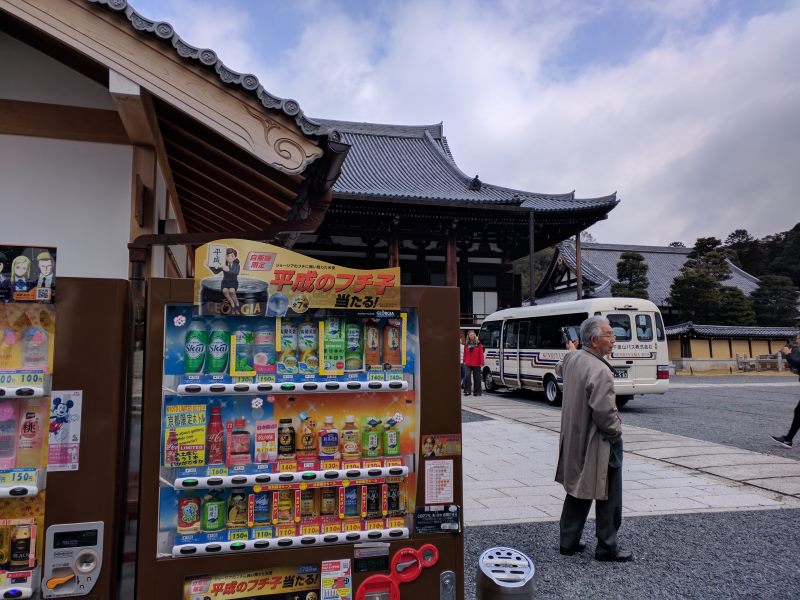
Here’s a great place to talk about vending machines. You see far more of them in Japan than the US and Europe. And they are awesome. In the picture below the bottom right rows that have red background serve hot items: coffee, tea, soup, etc. Blue background items are served cold. The vending machines I saw accept up to 10,000 Yen bills (around $10) and allow you to keep ordering until you use all the amount, or flip the handle to get your change.
To my Western eye it’s a bit jarring to see colorful vending machines in the middle of temple/shrine grounds, but they do remove the need to build a cafe or snack bar for tourists.
Second Japan thing: there are no public trash cans. If you have trash, you are expected to carry it with you and put it in your home trash. However, the vending machines do have aluminum and plastic recycle bins next to them. I wonder how full they get with non-recycle stuff.
We entered the main hall and were greeted by a (rather young) monk, who (thru a translator) gave a short introduction to the Jhodo, or “Pure Land,” sect of Buddhism and Honen, its founder in Japan.
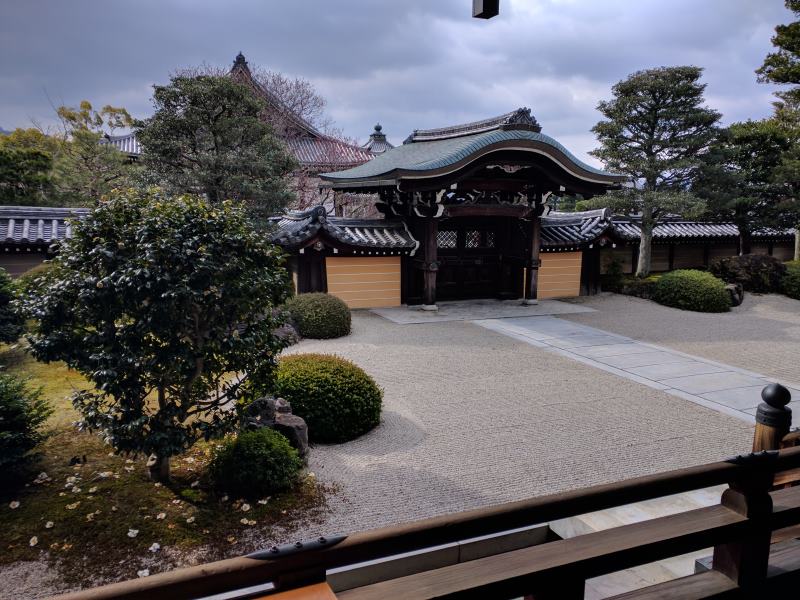
As expected, the grounds are very well kept.
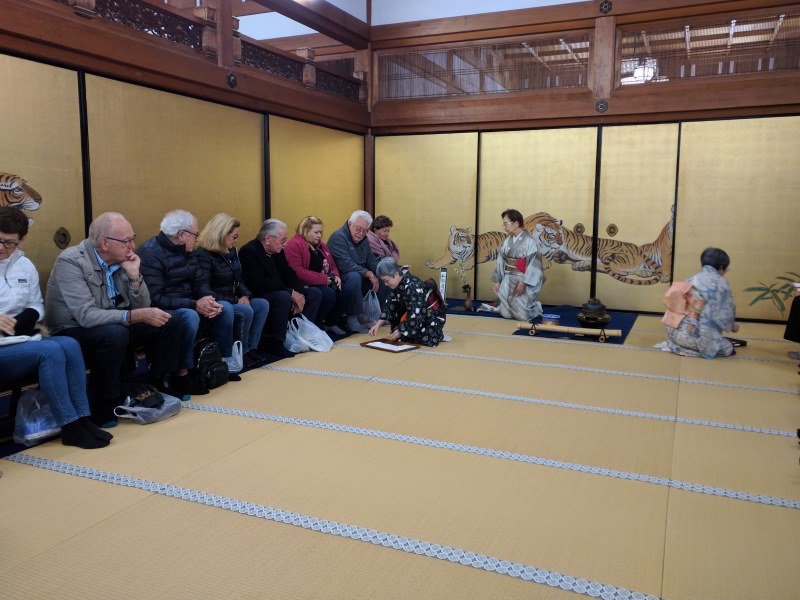
We then moved to several large rooms and were instructed on the Tea Ceremony. It was my second time, as a team came on board the ship in Osaka, but most of the guests on this trip did not see that class.
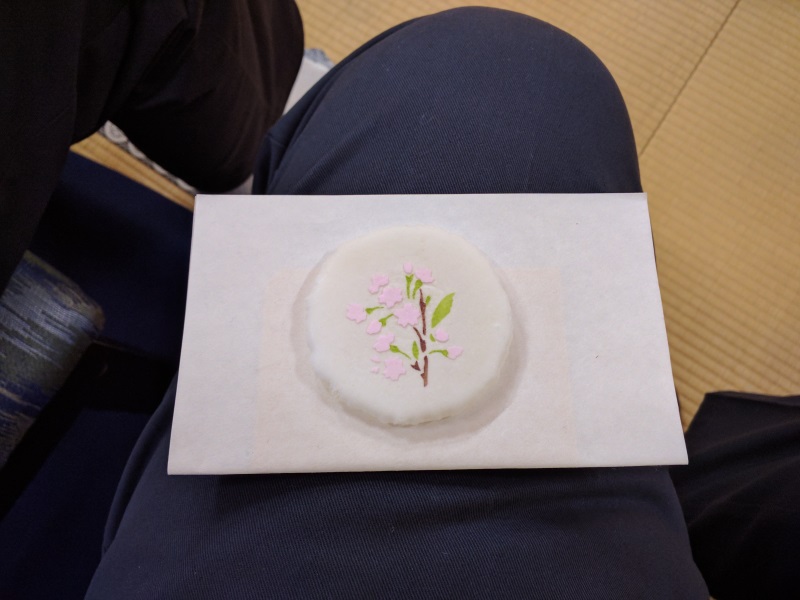
The tea master explained that the tea is rather bitter, so a sweet is served before drinking. This happened on the ship too, but I didn’t realize it was part of the ceremony. Here we received a small, frosted rice cookie.
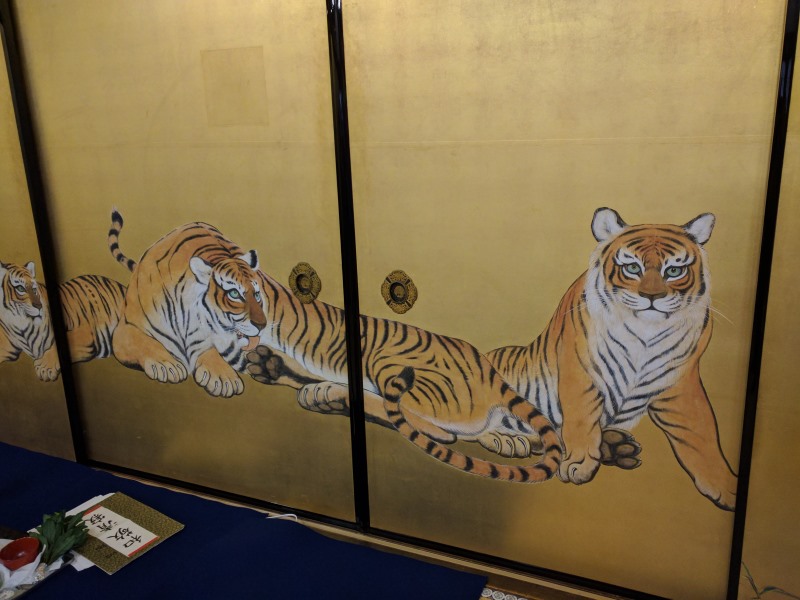
I explained the tea ceremony previously, so I won’t go into the details again. However, the sliding doors had a trick. Notice that if you slide the right-most door all the way, covering the middle door, the images on the left door line up with the right door.
We then moved into class rooms. There were three different “cultural events” offered, and we each got to choose two. I went for kimono wearing and calligraphy (flower arrangement is saved for next time). The kimono was made of heavy silk, which surprised me. My only exposure to silk was with shirts and ties, and the silk is thin and light weight. This kimono had heft. I had to bend down several times to allow the kimono wrangler to work on my collar. The fit was not too bad for a tall gaijin.
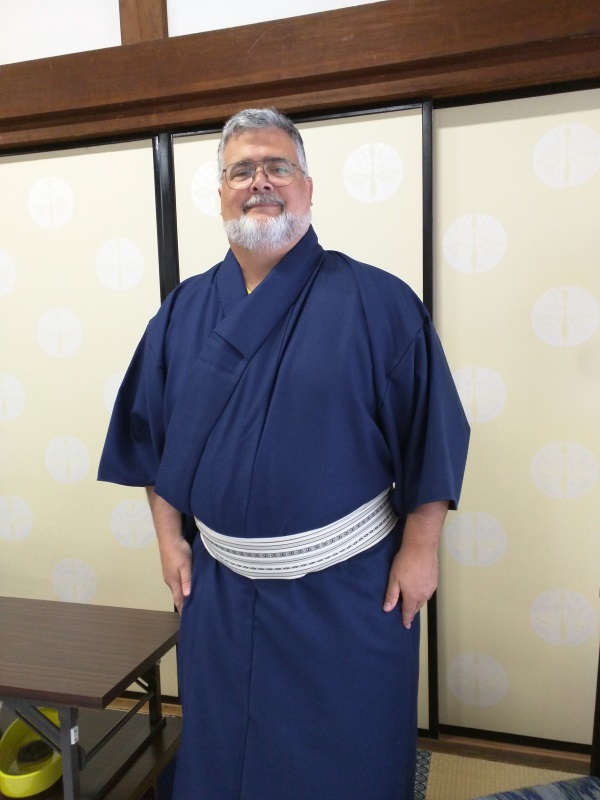
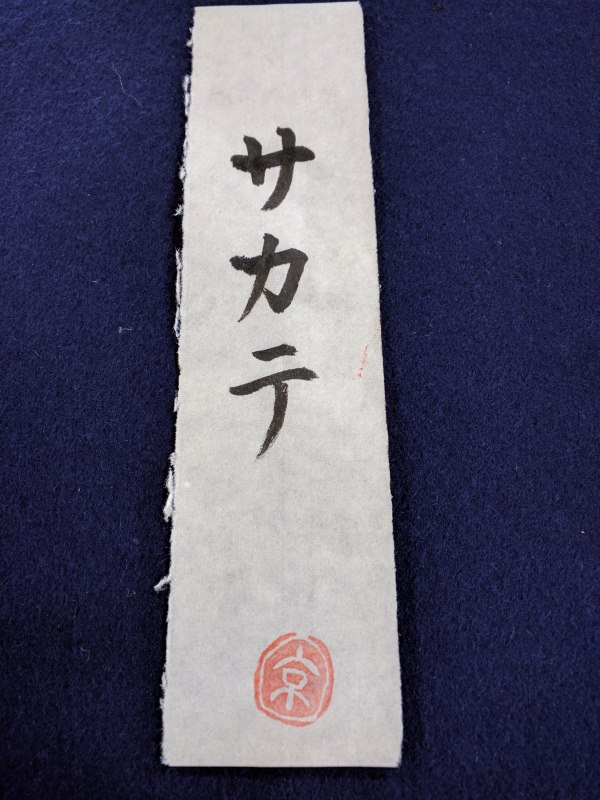
So, I wore the kimono to calligraphy class. In college I practiced European calligraphy with different types of pens, once even with a real feather. But I have never used a brush before. Our instructor demonstrated several examples, being careful to explain stroke order and pressure. She then presented everyone with their name in Katakana, the “alphabet” used by the Japanese for foreign words.
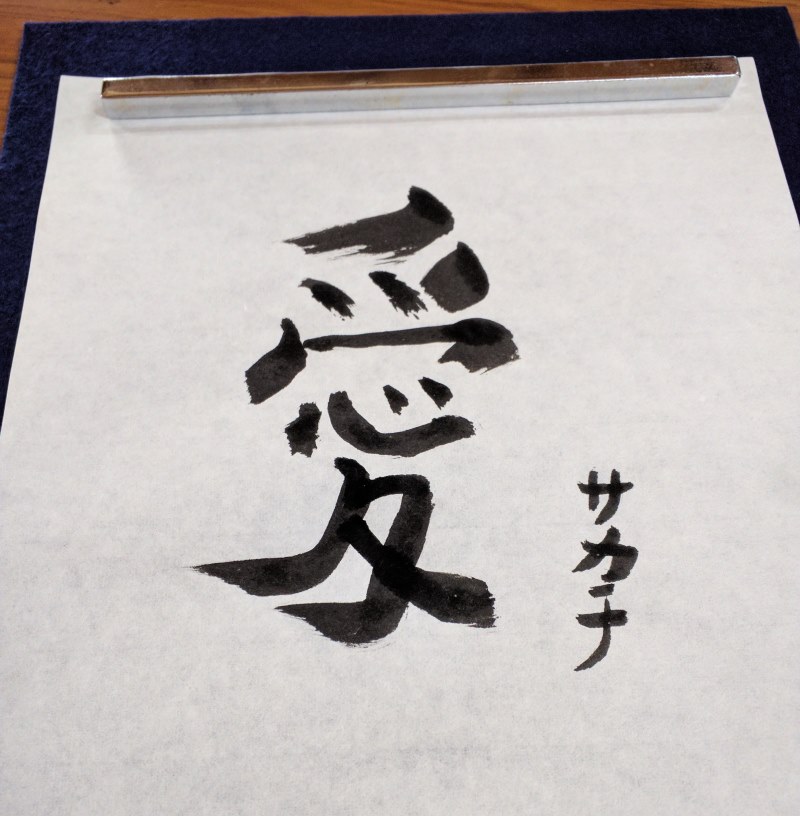
After practice with several characters, it was time for our masterpiece! I chose the kanji for “love”. My kinder garden penmanship is presented below for your amusement.
Class is now complete, so I returned the kimono. After misplacing my shoes, I returned to the buses and rode to lunch.
Stay tuned for part 2!
 Cruise Boy
Students loved the picture of you in the kimono. It was commented on how good you look…here are a few things my students said:
“He looks different than before…”
“Mr. Lindell is more tan…he looks good.”
“He lost weight! All that healthy food he is eating.”
“His face is thinner.”
I thought you might appreciate that people are noticing.
Thanks!
Kristen
LikeLike
Yup, looking sharp in the kimono!
LikeLike